
Inconel Alloy
617

Get a Free Quote NOW
Send Inquiry and Get Our Latest Full Set Data Sheet
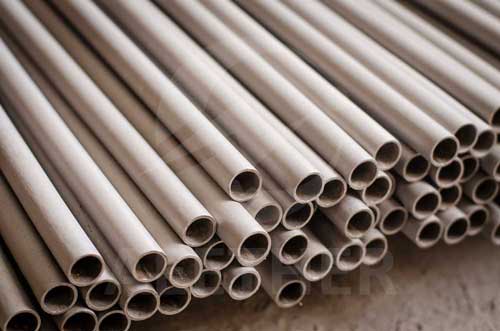
Inconel 617
Pipes
Contact Now


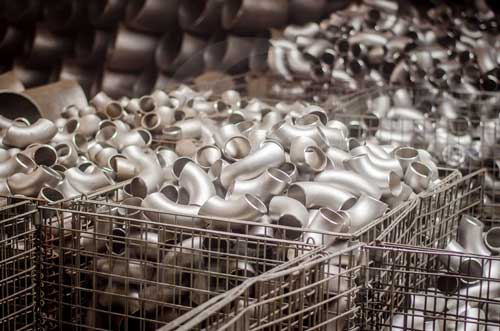


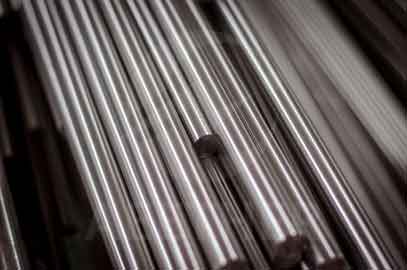


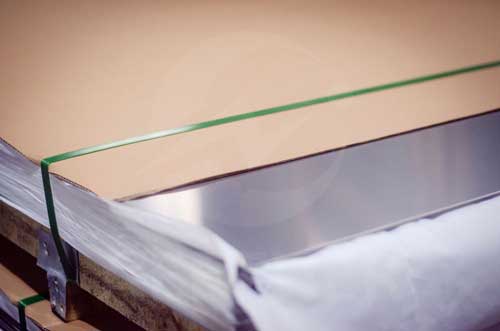


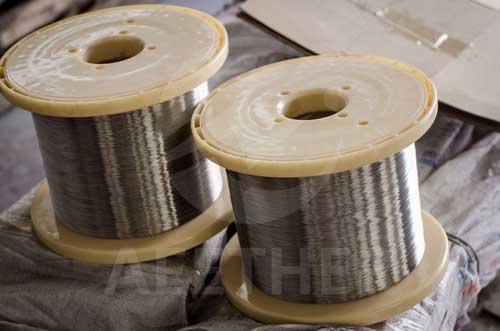


Inconel 617 Introduction

Solid Solution
Strengthened Alloy
Resistance
Behavior
High Temperature Characteristics
Strength &
Stability
Oxidation
Resistance
Carburization
Resistance
Sulfidation
Resistance
Nitriding
Resistance
Carbonitriding
Resistance
Resistance to
Molten Salts
Overview
As a leading supplier & manufacturer in China, AEETHER supply cost-effective Inconel 617 Products.
INCONEL® alloy 617 (UNS N06617 / W.Nr. 2.4663a) is a solid-solution, strengthened, nickel-chromium-cobalt-molybdenum alloy with an exceptional combination of high-temperature strength and oxidation resistance. The alloy also has excellent resistance to a wide range of corrosive environments, and it is readily formed and welded by conventional techniques.
The high nickel and chromium contents make the alloy resistant to a variety of both reducing and oxidizing media. The aluminum, in conjunction with the chromium, provides oxidation resistance at high temperatures. Solid-solution strengthening is imparted by the cobalt and molybdenum.
The combination of high strength and oxidation resistance at temperatures over 1800°F (980°C) makes INCONEL alloy 617 an attractive material for such components as ducting, combustion cans, and transition liners in both aircraft and land-based gas turbines. Because of its resistance to high-temperature corrosion, the alloy is used for catalyst-grid supports in the production of nitric acid, for heat-treating baskets, and for reduction boats in the refining of molybdenum. INCONEL alloy 617 also offers attractive properties for components of power-generating plants, both fossilfueled and nuclear.
Property values are given in both United States customary units and the International System of Units (SI). The SI unit of stress is the pascal (Pa), which is equivalent to newton per square metre. The approximate relationship between the pascal and the pound per square inch (psi) is 1 Pa = 0.0001450 psi, or 1 psi = 6895 Pa.
Mechanical Properties
INCONEL alloy 617 has high mechanical properties over a broad range of temperatures. One of the alloy’s outstanding characteristics is the strength level it maintains at elevated temperatures. The resistance of the alloy to high-temperature corrosion enhances the usefulness of its strength.
Corrosion Resistance
The composition of INCONEL alloy 617 includes substantial amounts of nickel, chromium, and aluminum for a high degree of resistance to oxidation and carburization at high temperatures. Those elements, along with the molybdenum content, also enable the alloy to withstand many wet corrosive environments.
Inconel 617 Chemical Composition
S ≤ 0.015%
Si ≤ 1.00%
C: 0.05% ~ 0.15%
Mn ≤ 1.00%
B ≤ 0.006%
Al: 0.80% ~ 1.50%
Ti ≤ 0.60%
Cu ≤ 0.50%
Co: 10.0% ~ 15.0%
Mo: 8.0% ~ 10.0%
Fe ≤ 3.0%
Cr: 20.0% ~ 24.0%
Ni ≥ 44.5%
Try our Premium Products






Get a Free Quote NOW
Inconel 617 Standards
Data Sheet
Physical Properties
| Density | g/cm3 | 8.36 | |
|---|---|---|---|
| lb/in.3 | 0.302 | ||
| Melting Range | °F | 2430 - 2510 | |
| °C | 1332 - 1380 | ||
| Specific Heat at 78°F (26°C) | Btu/lb-°F | 0.100 | |
| J/kg-°C | 419 | ||
| Electrical Resistivity at 78°F (26°C) | ohm-circ mil/ft | 736 | |
| μΩ-m | 1.22 | ||
Mechanical Properties
| Product Form | Product Method | Yield Strength (0.2% Offset) |
Tensile Strength | Elongation, % |
Reduction Of Area, % |
Hardness, BHN |
||
|---|---|---|---|---|---|---|---|---|
| ksi | MPa | ksi | MPa | |||||
| Plate | Hot Rolling | 46.7 | 322 | 106.5 | 734 | 62 | 56 | 172 |
| Bar | Hot Rolling | 46.1 | 318 | 111.5 | 769 | 56 | 50 | 181 |
| Tubing | Cold Drawing | 55.6 | 383 | 110 | 758 | 56 | - | 193 |
| Sheet or Strip | Cold Rolling | 50.9 | 351 | 109.5 | 755 | 58 | - | 173 |
Inconel 617 Applications


FAQ
What is the role of cobalt in Inconel 617?
Cobalt primarily serves to strengthen Inconel 617 through solid solution strengthening. It not only enhances the alloy’s strength but also maintains good ductility. Additionally, cobalt improves the alloy’s high-temperature performance.
Do you smelt the material yourselves?
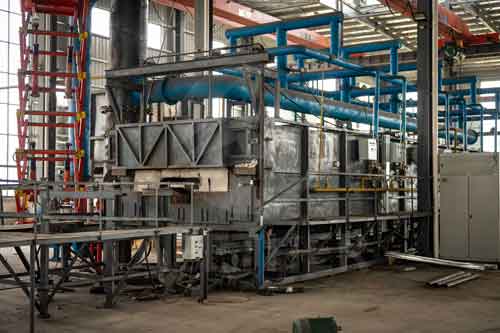
Yes, we have a total of over 30 vacuum furnaces and electroslag remelting furnaces. We have furnaces with capacities of 50 kg, 200 kg, 1,000 kg, and 5,000 kg to accommodate different volume requirements. This also allows us to offer lower minimum order quantities (MOQs).
What is solid solution strengthening?
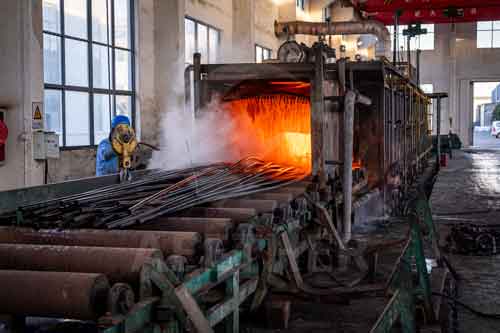
Solid solution strengthening refers to the process where the matrix elements of an alloy dissolve other elements. This dissolution enhances the alloy’s strength, hence the term "solid solution strengthening." Common matrix elements include nickel, cobalt, and iron. Common solute elements include chromium, molybdenum, tungsten, niobium, and others.
Are price fluctuations normal?
Since alloys are composed of different metallic elements, their prices are significantly influenced by raw metal costs. Metals such as nickel, molybdenum, and cobalt in superalloys primarily determine the alloy’s price. When the prices of these metals fluctuate, alloy prices will also change significantly.
What do UNS and W.Nr. stand for?
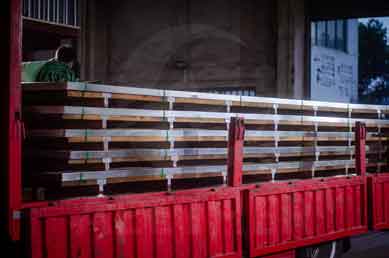
Both are numbering systems established to standardize material grade designations. They were designed to ensure that each grade has a unique corresponding number, thereby avoiding confusion caused by differing terminology. In practice, the UNS numbering system is generally used in the United States, while the W.Nr. numbering system is commonly used in Europe.
What does "purity" mean?
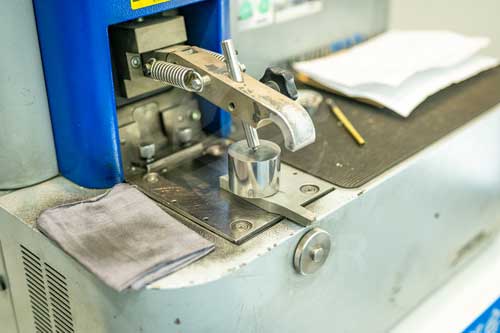
Purity is an indicator of the content of non-essential elements in an alloy, including harmful impurities introduced from raw materials or during processing. The lower the proportion of these elements, the higher the purity, and the material typically exhibits better ductility and toughness.
What exactly does tensile strength refer to?
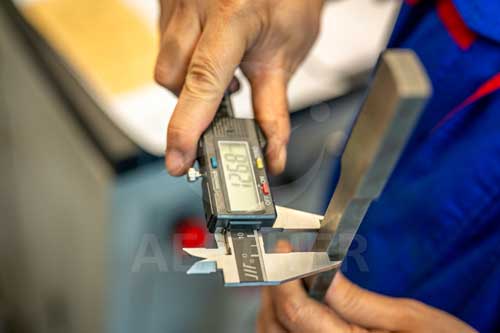
Tensile strength is a key indicator for evaluating a material’s mechanical properties. It determines the maximum stress a material can withstand before breaking during a tensile test. In other words, the higher this value, the more resistant the material is to breaking. For applications requiring the material to withstand tensile loads, tensile strength is an essential design parameter. Additionally, it reflects the material’s overall strength performance to a certain extent.
Related Article



More Inconel Grades +
600
S ≤ 0.015%
Si
Si ≤ 0.50%
C
C ≤ 0.15%
Mn
Mn ≤ 1.00%
Cu
Cu ≤ 0.50%
Fe
Fe: 6.0% ~ 10.0%
Cr
Cr: 14.0% ~ 17.0%
Ni
Ni ≥ 72.0%
601
S ≤ 0.015%
Si
Si ≤ 0.50%
C
C ≤ 0.10%
Mn
Mn ≤ 1.00%
Al
Al: 1.00% ~ 1.70%
Cu
Cu ≤ 1.00%
Fe
Fe: 7.7% ~ 17.4%
Cr
Cr: 21.0% ~ 25.0%
Ni
Ni: 58.0% ~ 63.0%
601GC
S ≤ 0.015%
Si
Si ≤ 1.00%
C: 0.03% ~ 0.08%
Mn
Mn ≤ 1.00%
N: 0.02% ~ 0.07%
Zr: 0.070% ~ 0.250%
Al
Al: 0.80% ~ 1.70%
Cu
Cu ≤ 1.00%
Fe
Fe: 6.9% ~ 15.1%
Cr
Cr: 23.0% ~ 25.0%
Ni
Ni: 58.0% ~ 63.0%
602CA
S ≤ 0.010%
Si
Si ≤ 0.50%
C
C: 0.15% ~ 0.25%
Mn ≤ 0.15%
P ≤ 0.020%
Zr: 0.01% ~ 0.10%
Y
Y: 0.05% ~ 0.12%
Al
Al: 1.8% ~ 2.4%
Ti: 0.1% ~ 0.2%
Cu ≤ 0.10%
Fe
Fe: 8.0% ~ 11.0%
Cr
Cr: 24.0% ~ 26.0%
Ni
Ni: 59.2% ~ 65.9%
603XL
Si
Si ≤ 2.00%
C
C ≤ 0.30%
Mn
Mn ≤ 0.30%
Rare Earth ≤ 0.10%
Al
Al ≤ 0.50%
Ti
Ti ≤ 0.50%
Mo
Mo ≤ 4.0%
Cr
Cr: 15.0% ~ 23.0%
Ni
Ni: 69.3% ~ 77.3%
617
S ≤ 0.015%
Si
Si ≤ 1.00%
C
C: 0.05% ~ 0.15%
Mn
Mn ≤ 1.00%
B ≤ 0.006%
Co
Co: 10.0% ~ 15.0%
Al
Al: 0.80% ~ 1.50%
Ti
Ti ≤ 0.60%
Cu
Cu ≤ 0.50%
Fe
Fe ≤ 3.0%
Mo
Mo: 8.0% ~ 10.0%
Cr
Cr: 20.0% ~ 24.0%
Ni
Ni ≥ 44.5%
625
S ≤ 0.015%
Si
Si ≤ 0.50%
C
C ≤ 0.10%
Mn
Mn ≤ 0.50%
P ≤ 0.015%
Co
Co ≤ 1.00%
Nb
Nb + Ta: 3.15% ~ 4.15%
Ta
Nb + Ta: 3.15% ~ 4.15%
Al
Al ≤ 0.40%
Ti
Ti ≤ 0.40%
Fe
Fe ≤ 5.0%
Mo
Mo: 8.0% ~ 10.0%
Cr
Cr: 20.0% ~ 23.0%
Ni
Ni ≥ 58.0%
625LCF
S ≤ 0.015%
Si ≤ 0.15%
C ≤ 0.03%
Mn
Mn ≤ 0.50%
P ≤ 0.015%
N ≤ 0.02%
Co
Co ≤ 1.00%
Nb
Nb + Ta: 3.15% ~ 4.15%
Ta
Nb + Ta: 3.15% ~ 4.15%
Al
Al ≤ 0.40%
Ti
Ti ≤ 0.40%
Fe
Fe ≤ 5.0%
Mo
Mo: 8.0% ~ 10.0%
Cr
Cr: 20.0% ~ 23.0%
Ni
Ni ≥ 58.0%
686
S ≤ 0.020%
Si ≤ 0.08%
C ≤ 0.01%
Mn
Mn ≤ 0.75%
P ≤ 0.040%
W
W: 3.0% ~ 4.4%
Ti: 0.02% ~ 0.25%
Fe
Fe ≤ 5.0%
Mo
Mo: 15.0% ~ 17.0%
Cr
Cr: 19.0% ~ 23.0%
Ni
Ni: 49.5% ~ 62.9%
690
S ≤ 0.015%
Si
Si ≤ 0.50%
C ≤ 0.05%
Mn
Mn ≤ 0.50%
Cu
Cu ≤ 0.50%
Fe
Fe: 7.0% ~ 11.0%
Cr
Cr: 27.0% ~ 31.0%
Ni
Ni ≥ 58.0%
693
S ≤ 0.010%
Si
Si ≤ 0.50%
C
C ≤ 0.15%
Mn
Mn ≤ 1.00%
Nb
Nb: 0.50% ~ 2.50%
Al
Al: 2.50% ~ 4.00%
Ti
Ti ≤ 1.00%
Cu
Cu ≤ 0.50%
Fe
Fe: 2.5% ~ 6.0%
Cr
Cr: 27.0% ~ 31.0%
Ni
Ni: 53.3% ~ 64.3%
706
S ≤ 0.015%
Si
Si ≤ 0.35%
C ≤ 0.06%
Mn
Mn ≤ 0.35%
P ≤ 0.020%
B ≤ 0.006%
Co
Co ≤ 1.00%
Nb
Nb: 2.5% ~ 3.3%
Ta ≤ 0.05%
Al
Al ≤ 0.40%
Ti
Ti: 1.50% ~ 2.00%
Cu
Cu ≤ 0.30%
Fe
Fe ≥ 32.5%
Cr
Cr: 14.5% ~ 17.5%
Ni
Ni: 39.0% ~ 44.0%
718
S ≤ 0.015%
Si
Si ≤ 0.35%
C
C ≤ 0.08%
Mn
Mn ≤ 0.35%
P ≤ 0.015%
B ≤ 0.006%
Co
Co ≤ 1.00%
Nb
Nb + Ta: 4.75% ~ 5.50%
Ta
Nb + Ta: 4.75% ~ 5.50%
Al
Al: 0.20% ~ 0.80%
Ti
Ti: 0.65% ~ 1.15%
Cu
Cu ≤ 0.30%
Fe
Fe: 11.1% ~ 22.5%
Mo
Mo: 2.80% ~ 3.30%
Cr
Cr: 17.0% ~ 21.0%
Ni
Ni: 50.0% ~ 55.0%
718SPF
S ≤ 0.002%
Si
Si ≤ 0.35%
C ≤ 0.05%
Mn
Mn ≤ 0.35%
P ≤ 0.015%
B ≤ 0.006%
N ≤ 0.01%
Co
Co ≤ 1.00%
Nb
Nb: 4.75% ~ 5.25%
Ta ≤ 0.05%
Al
Al: 0.20% ~ 0.80%
Ti
Ti: 0.65% ~ 1.15%
Cu
Cu ≤ 0.30%
Fe
Fe ≥ 11.4%
Mo
Mo: 2.80% ~ 3.30%
Cr
Cr: 17.0% ~ 21.0%
Ni
Ni: 50.0% ~ 55.0%
725
S ≤ 0.010%
Si
Si ≤ 0.20%
C ≤ 0.03%
Mn
Mn ≤ 0.35%
P ≤ 0.015%
Nb
Nb: 2.75% ~ 4.00%
Al
Al ≤ 0.35%
Ti
Ti: 1.00% ~ 1.70%
Fe
Fe: 2.3% ~ 14.3%
Mo
Mo: 7.0% ~ 9.5%
Cr
Cr: 19.0% ~ 22.5%
Ni
Ni: 55.0% ~ 59.0%
740H
S ≤ 0.030%
Si
Si ≤ 1.00%
C: 0.005% ~ 0.080%
Mn
Mn ≤ 1.00%
P ≤ 0.030%
B: 0.0006% ~ 0.0060%
Co
Co: 15.0% ~ 22.0%
Nb
Nb + Ta: 0.50% ~ 2.50%
Ta
Nb + Ta: 0.50% ~ 2.50%
Al
Al: 0.20% ~ 2.00%
Ti
Ti: 0.50% ~ 2.50%
Cu
Cu ≤ 0.50%
Fe
Fe ≤ 3.00%
Mo
Mo ≤ 2.0%
Cr
Cr: 23.5% ~ 25.5%
Ni
Ni ≥ 37.9%
X-750
S ≤ 0.010%
Si
Si ≤ 0.50%
C
C ≤ 0.08%
Mn
Mn ≤ 1.00%
Co
Co ≤ 1.00%
Nb + Ta: 0.70% ~ 1.20%
Nb + Ta: 0.70% ~ 1.20%
Al
Al: 0.40% ~ 1.00%
Ti
Ti: 2.25% ~ 2.75%
Cu
Cu ≤ 0.50%
Fe
Fe: 5.0% ~ 9.0%
Cr
Cr: 14.0% ~ 17.0%
Ni
Ni ≥ 70.0%
751
S ≤ 0.010%
Si
Si ≤ 0.50%
C
C ≤ 0.10%
Mn
Mn ≤ 1.00%
Co
Ni + Co ≥ 70.0%
Nb + Ta: 0.70% ~ 1.20%
Nb + Ta: 0.70% ~ 1.20%
Al
Al: 0.90% ~ 1.50%
Ti
Ti: 2.00% ~ 2.60%
Cu
Cu ≤ 0.50%
Fe
Fe: 5.0% ~ 9.0%
Cr
Cr: 14.0% ~ 17.0%
Ni
Ni + Co ≥ 70.0%
MA754
C ≤ 0.05%
Y2O3
Y2O3 ≈ 0.60%
Al
Al ≤ 0.30%
Ti
Ti ≤ 0.50%
Fe
Fe ≤ 1.0%
Cr
Cr ≈ 20.0%
Ni
Ni ≈ 78.0%
MA758
C ≤ 0.05%
Y2O3
Y2O3 ≈ 0.60%
Al
Al ≤ 0.30%
Ti
Ti ≤ 0.50%
Fe
Fe ≤ 1.0%
Cr
Cr ≈ 30.0%
Ni
Ni ≈ 67.6%
783
S ≤ 0.005%
Si
Si ≤ 0.50%
C ≤ 0.03%
Mn
Mn ≤ 0.50%
P ≤ 0.015%
B: 0.003% ~ 0.012%
Co
Co ≥ 28.0%
Nb
Nb: 2.50% ~ 3.50%
Ta ≤ 0.05%
Al
Al: 5.00% ~ 6.00%
Ti
Ti ≤ 0.40%
Cu
Cu ≤ 0.50%
Fe
Fe: 24.0% ~ 27.0%
Cr
Cr: 2.5% ~ 3.5%
Ni
Ni: 26.0% ~ 30.0%