
Inconel Alloy
725

Get a Free Quote NOW
Send Inquiry and Get Our Latest Full Set Data Sheet




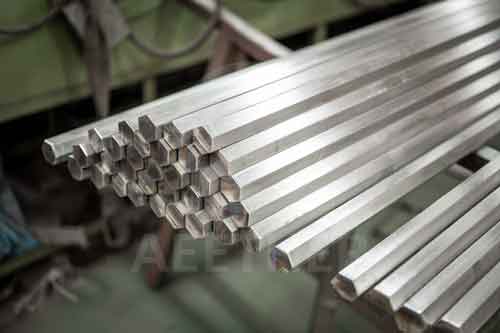

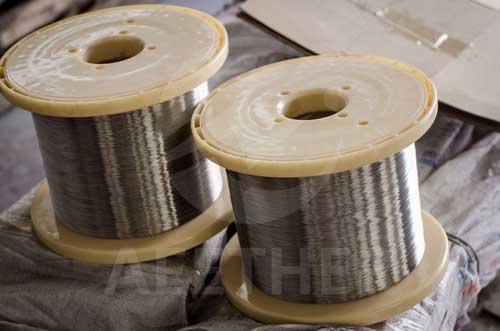

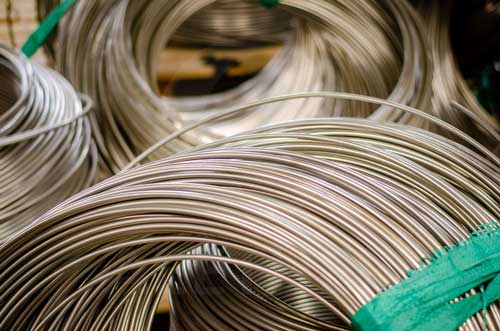

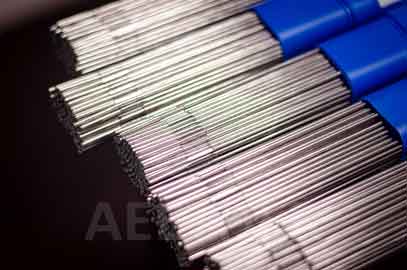

Inconel 725 Introduction

Precipitation
Strengthened Alloy
Resistance
Behavior
Overview
As a leading supplier & manufacturer in China, AEETHER supply cost-effective Inconel 725 Products.
INCONEL® alloy 725 (UNS N07725) is a nickelchromium-molybdenum-niobium alloy that is highly resistant to corrosion and is age hardenable for extremely high strength. It has essentially the same corrosion resistance as INCONEL alloy 625, which is widely used in a broad range of severely corrosive environments. The strength of age-hardened INCONEL alloy 725 is of the order of twice that of annealed alloy 625. Because the strength of alloy 725 is developed by heat treatment, not by cold work, ductility and toughness remain high. Also, strength can be imparted to large or non-uniform sections that cannot be strengthened by cold work.
High levels of nickel and chromium provide corrosion resistance in reducing and oxidizing environments. The substantial molybdenum content enhances resistance to reducing media and provides a high degree of resistance to pitting and crevice corrosion. Additionally, the combination of elements makes the alloy resistant to hydrogen embrittlement and stresscorrosion cracking.
The properties of INCONEL alloy 725 are useful for a range of applications that require outstanding corrosion resistance along with high strength. The alloy is used for hangers, landing nipples, side pocket mandrels and polished bore receptacles in sour gas service, where it resists the effects of hydrogen sulfide, chlorides and carbon dioxide. The alloy is also attractive for high strength fasteners in marine applications, where it resists corrosion, pitting and crevice attack in sea water.
Corrosion Resistance
High nickel, chromium and molybdenum contents enable INCONEL alloy 725 to resist a broad range of corrosive environments. The alloy is especially resistant to media containing carbon dioxide, chlorides and hydrogen sulfide, such as those encountered in deep sour gas wells. In such environments, INCONEL alloy 725 resists corrosion, pitting, hydrogen embrittlement and stress-corrosion cracking.
INCONEL alloy 725 is approved under NACE MR0175 for use in sour gas wells. INCONEL alloy 725 displays excellent resistance to general and localized corrosion in brines and sea water. Table 11 shows the results of crevice corrosion tests in sea water. These data show alloy 725 to be superior to alloy 625 in resistance to crevice corrosion initiation.
Inconel 725 Chemical Composition
S ≤ 0.010%
Si ≤ 0.20%
C ≤ 0.03%
Mn ≤ 0.35%
P ≤ 0.015%
Al ≤ 0.35%
Ti: 1.00% ~ 1.70%
Nb: 2.75% ~ 4.00%
Mo: 7.0% ~ 9.5%
Fe: 2.3% ~ 14.3%
Cr: 19.0% ~ 22.5%
Ni: 55.0% ~ 59.0%
Try our Premium Products


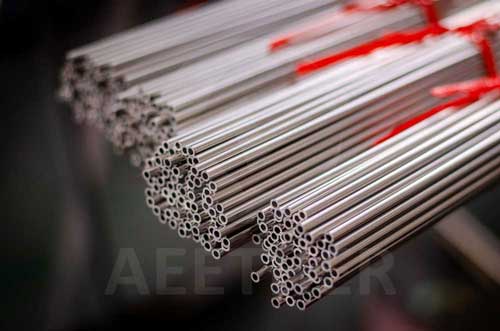


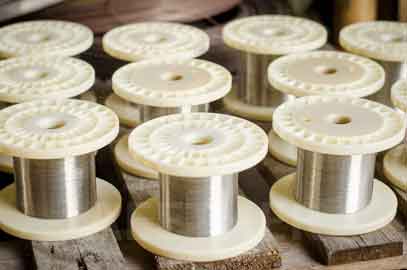


Get a Free Quote NOW
Inconel 725 Standards
Data Sheet
Physical Properties
| Density | g/cm3 | 8.31 | |
|---|---|---|---|
| lb/in.3 | 0.300 | ||
| Melting Range | °F | 2320 - 2449 | |
| °C | 1271 - 1343 | ||
| Permeability at 200 oersted | 15.9 kA/m | < 1.001 | |
| Young’s Modulus (70°F) | 103 ksi | 29.6 | |
| GPa | 204 | ||
| Shear Modulus (70°F) | 103 ksi | 11.3 | |
| GPa | 78 | ||
| Poisson’s Ratio (70°F) | 0.31 | ||
Mechanical Properties
| Condition | Yield Strength (0.2% Offset) |
Tensile Strength |
Elongation | Hardness | Charpy Impact |
|||
|---|---|---|---|---|---|---|---|---|
| ksi | MPa | ksi | MPa | % | Rc | ft-lbf | J | |
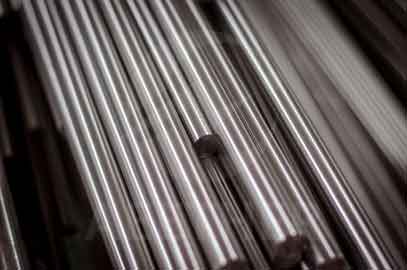
| Round, Transverse specimens from hot-finished rounds of 4.0 to 7.5 in (102 to 190 mm) diameter. | ||||||||
| Annealed | 62 | 427 | 124 | 855 | 57 | 5 | - | - |
| Age Hardened | 133 | 917 | 180 | 1241 | 30 | 36 | 68 | 92 |
| Round, Longitudinal specimens from hot-finished rounds of 0.5 to 7.5 in (13 to 190 mm) diameter. | ||||||||
| Age Hardened | 131 | 903 | 180 | 1241 | 31 | 36 | 97 | 132 |
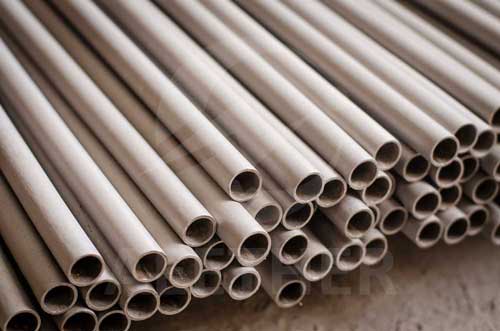
| Tube | ||||||||
| Annealed | 48.4 | 334 | 113.6 | 783 | 60 | 5 | - | - |
| Age Hardened | 133.6 | 921 | 183.9 | 1268 | 27 | 39 | - | - |
Inconel 725 Applications


FAQ
What's the difference between Inconel 725 and Inconel 625?
Inconel 725 can be seen as a precipitation-strengthened version of Inconel 625. It incorporates more titanium, giving the alloy higher strength. However, this reduces the chromium and cobalt content. Therefore, Inconel 725's corrosion resistance is not as good as Inconel 625.
Do you smelt the materials yourself?
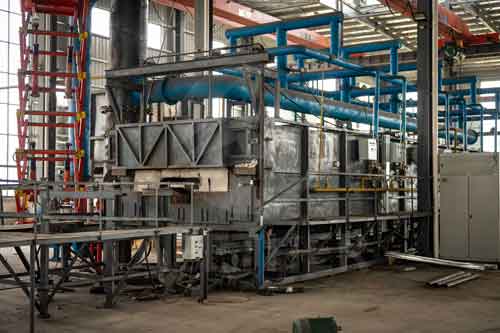
Yes, we have our own smelting equipment, totaling over 30 vacuum smelting furnaces and electroslag remelting furnaces. These furnaces cover various specifications including 50kg, 200kg, 1000kg, and 5000kg, which can flexibly match different production batch needs. It is precisely because of this smelting capability that we can provide customers with lower minimum order quantities.
How to understand the concept of precipitation strengthening?
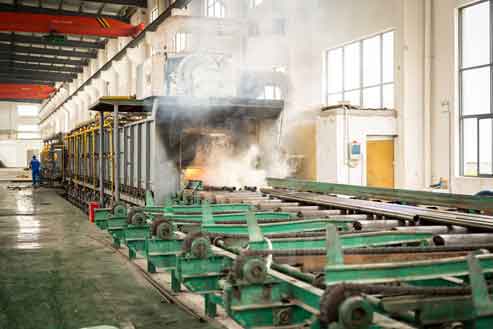
Precipitation strengthening is a performance characteristic possessed only by some alloys. It refers to the ability of an alloy to achieve increased strength through a heat treatment process such as aging treatment. During the aging process, dispersed precipitates form within the alloy, hindering dislocation movement and thus strengthening it. Aluminum, titanium, niobium, and tantalum are key elements determining the effectiveness of precipitation strengthening.
How do you determine if the composition meets standards?
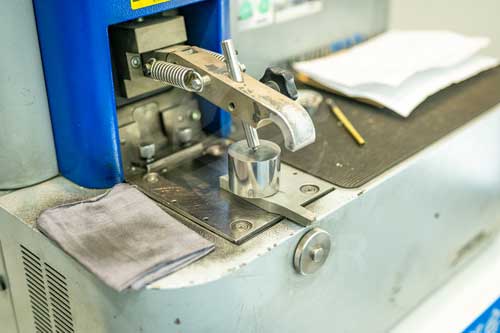
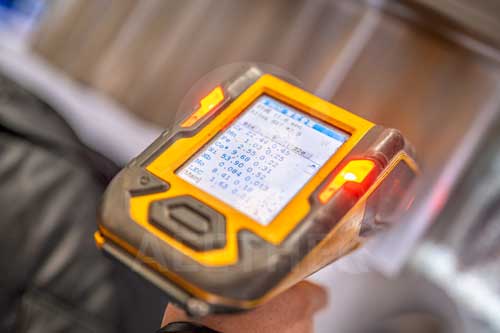
From the smelting stage, we strictly control the material ratio and conduct chemical analysis at key points. After the finished product, we perform PMI testing on each batch of material to ensure the composition meets requirements. If you have higher verification needs, we can also send the material to a third-party testing agency to issue a final chemical analysis report.
How long does it typically take to receive a response after submitting an inquiry?
We have a professional sales team that follows up, and under normal circumstances, we will send you a quotation within 24 hours. If the information you provide is incomplete, or if we encounter a situation where we cannot provide a quotation, we will communicate with you promptly.
What is tensile strength?
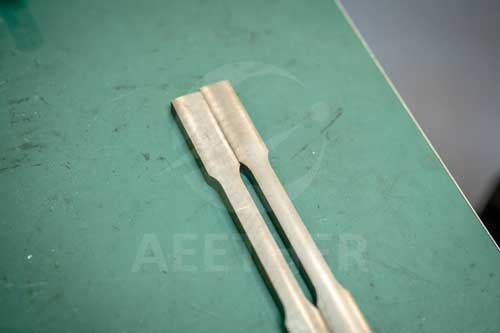
Tensile strength is a basic indicator for judging the strength grade of a material. It determines the maximum stress that a material can withstand when stretched until it breaks. The higher this value, the stronger the material's resistance to tensile fracture. Therefore, tensile strength is a key reference for applications requiring materials that are not easily broken by pulling. It also indirectly reflects the overall strength level of the material.
What exactly is yield strength?
It defines the critical stress value at which a material can maintain its plasticity under tension. Like tensile strength, yield strength is also a core indicator of material strength, but its significance lies in ensuring that the material will not undergo permanent deformation during use. According to the basic laws of materials mechanics, the tensile process necessarily involves deformation before fracture. Therefore, the yield strength of the same material is often lower than its tensile strength.
Related Article


More Inconel Grades +
600
S ≤ 0.015%
Si
Si ≤ 0.50%
C
C ≤ 0.15%
Mn
Mn ≤ 1.00%
Cu
Cu ≤ 0.50%
Fe
Fe: 6.0% ~ 10.0%
Cr
Cr: 14.0% ~ 17.0%
Ni
Ni ≥ 72.0%
601
S ≤ 0.015%
Si
Si ≤ 0.50%
C
C ≤ 0.10%
Mn
Mn ≤ 1.00%
Al
Al: 1.00% ~ 1.70%
Cu
Cu ≤ 1.00%
Fe
Fe: 7.7% ~ 17.4%
Cr
Cr: 21.0% ~ 25.0%
Ni
Ni: 58.0% ~ 63.0%
601GC
S ≤ 0.015%
Si
Si ≤ 1.00%
C: 0.03% ~ 0.08%
Mn
Mn ≤ 1.00%
N: 0.02% ~ 0.07%
Zr: 0.070% ~ 0.250%
Al
Al: 0.80% ~ 1.70%
Cu
Cu ≤ 1.00%
Fe
Fe: 6.9% ~ 15.1%
Cr
Cr: 23.0% ~ 25.0%
Ni
Ni: 58.0% ~ 63.0%
602CA
S ≤ 0.010%
Si
Si ≤ 0.50%
C
C: 0.15% ~ 0.25%
Mn ≤ 0.15%
P ≤ 0.020%
Zr: 0.01% ~ 0.10%
Y
Y: 0.05% ~ 0.12%
Al
Al: 1.8% ~ 2.4%
Ti: 0.1% ~ 0.2%
Cu ≤ 0.10%
Fe
Fe: 8.0% ~ 11.0%
Cr
Cr: 24.0% ~ 26.0%
Ni
Ni: 59.2% ~ 65.9%
603XL
Si
Si ≤ 2.00%
C
C ≤ 0.30%
Mn
Mn ≤ 0.30%
Rare Earth ≤ 0.10%
Al
Al ≤ 0.50%
Ti
Ti ≤ 0.50%
Mo
Mo ≤ 4.0%
Cr
Cr: 15.0% ~ 23.0%
Ni
Ni: 69.3% ~ 77.3%
617
S ≤ 0.015%
Si
Si ≤ 1.00%
C
C: 0.05% ~ 0.15%
Mn
Mn ≤ 1.00%
B ≤ 0.006%
Co
Co: 10.0% ~ 15.0%
Al
Al: 0.80% ~ 1.50%
Ti
Ti ≤ 0.60%
Cu
Cu ≤ 0.50%
Fe
Fe ≤ 3.0%
Mo
Mo: 8.0% ~ 10.0%
Cr
Cr: 20.0% ~ 24.0%
Ni
Ni ≥ 44.5%
625
S ≤ 0.015%
Si
Si ≤ 0.50%
C
C ≤ 0.10%
Mn
Mn ≤ 0.50%
P ≤ 0.015%
Co
Co ≤ 1.00%
Nb
Nb + Ta: 3.15% ~ 4.15%
Ta
Nb + Ta: 3.15% ~ 4.15%
Al
Al ≤ 0.40%
Ti
Ti ≤ 0.40%
Fe
Fe ≤ 5.0%
Mo
Mo: 8.0% ~ 10.0%
Cr
Cr: 20.0% ~ 23.0%
Ni
Ni ≥ 58.0%
625LCF
S ≤ 0.015%
Si ≤ 0.15%
C ≤ 0.03%
Mn
Mn ≤ 0.50%
P ≤ 0.015%
N ≤ 0.02%
Co
Co ≤ 1.00%
Nb
Nb + Ta: 3.15% ~ 4.15%
Ta
Nb + Ta: 3.15% ~ 4.15%
Al
Al ≤ 0.40%
Ti
Ti ≤ 0.40%
Fe
Fe ≤ 5.0%
Mo
Mo: 8.0% ~ 10.0%
Cr
Cr: 20.0% ~ 23.0%
Ni
Ni ≥ 58.0%
686
S ≤ 0.020%
Si ≤ 0.08%
C ≤ 0.01%
Mn
Mn ≤ 0.75%
P ≤ 0.040%
W
W: 3.0% ~ 4.4%
Ti: 0.02% ~ 0.25%
Fe
Fe ≤ 5.0%
Mo
Mo: 15.0% ~ 17.0%
Cr
Cr: 19.0% ~ 23.0%
Ni
Ni: 49.5% ~ 62.9%
690
S ≤ 0.015%
Si
Si ≤ 0.50%
C ≤ 0.05%
Mn
Mn ≤ 0.50%
Cu
Cu ≤ 0.50%
Fe
Fe: 7.0% ~ 11.0%
Cr
Cr: 27.0% ~ 31.0%
Ni
Ni ≥ 58.0%
693
S ≤ 0.010%
Si
Si ≤ 0.50%
C
C ≤ 0.15%
Mn
Mn ≤ 1.00%
Nb
Nb: 0.50% ~ 2.50%
Al
Al: 2.50% ~ 4.00%
Ti
Ti ≤ 1.00%
Cu
Cu ≤ 0.50%
Fe
Fe: 2.5% ~ 6.0%
Cr
Cr: 27.0% ~ 31.0%
Ni
Ni: 53.3% ~ 64.3%
706
S ≤ 0.015%
Si
Si ≤ 0.35%
C ≤ 0.06%
Mn
Mn ≤ 0.35%
P ≤ 0.020%
B ≤ 0.006%
Co
Co ≤ 1.00%
Nb
Nb: 2.5% ~ 3.3%
Ta ≤ 0.05%
Al
Al ≤ 0.40%
Ti
Ti: 1.50% ~ 2.00%
Cu
Cu ≤ 0.30%
Fe
Fe ≥ 32.5%
Cr
Cr: 14.5% ~ 17.5%
Ni
Ni: 39.0% ~ 44.0%
718
S ≤ 0.015%
Si
Si ≤ 0.35%
C
C ≤ 0.08%
Mn
Mn ≤ 0.35%
P ≤ 0.015%
B ≤ 0.006%
Co
Co ≤ 1.00%
Nb
Nb + Ta: 4.75% ~ 5.50%
Ta
Nb + Ta: 4.75% ~ 5.50%
Al
Al: 0.20% ~ 0.80%
Ti
Ti: 0.65% ~ 1.15%
Cu
Cu ≤ 0.30%
Fe
Fe: 11.1% ~ 22.5%
Mo
Mo: 2.80% ~ 3.30%
Cr
Cr: 17.0% ~ 21.0%
Ni
Ni: 50.0% ~ 55.0%
718SPF
S ≤ 0.002%
Si
Si ≤ 0.35%
C ≤ 0.05%
Mn
Mn ≤ 0.35%
P ≤ 0.015%
B ≤ 0.006%
N ≤ 0.01%
Co
Co ≤ 1.00%
Nb
Nb: 4.75% ~ 5.25%
Ta ≤ 0.05%
Al
Al: 0.20% ~ 0.80%
Ti
Ti: 0.65% ~ 1.15%
Cu
Cu ≤ 0.30%
Fe
Fe ≥ 11.4%
Mo
Mo: 2.80% ~ 3.30%
Cr
Cr: 17.0% ~ 21.0%
Ni
Ni: 50.0% ~ 55.0%
725
S ≤ 0.010%
Si
Si ≤ 0.20%
C ≤ 0.03%
Mn
Mn ≤ 0.35%
P ≤ 0.015%
Nb
Nb: 2.75% ~ 4.00%
Al
Al ≤ 0.35%
Ti
Ti: 1.00% ~ 1.70%
Fe
Fe: 2.3% ~ 14.3%
Mo
Mo: 7.0% ~ 9.5%
Cr
Cr: 19.0% ~ 22.5%
Ni
Ni: 55.0% ~ 59.0%
740H
S ≤ 0.030%
Si
Si ≤ 1.00%
C: 0.005% ~ 0.080%
Mn
Mn ≤ 1.00%
P ≤ 0.030%
B: 0.0006% ~ 0.0060%
Co
Co: 15.0% ~ 22.0%
Nb
Nb + Ta: 0.50% ~ 2.50%
Ta
Nb + Ta: 0.50% ~ 2.50%
Al
Al: 0.20% ~ 2.00%
Ti
Ti: 0.50% ~ 2.50%
Cu
Cu ≤ 0.50%
Fe
Fe ≤ 3.00%
Mo
Mo ≤ 2.0%
Cr
Cr: 23.5% ~ 25.5%
Ni
Ni ≥ 37.9%
X-750
S ≤ 0.010%
Si
Si ≤ 0.50%
C
C ≤ 0.08%
Mn
Mn ≤ 1.00%
Co
Co ≤ 1.00%
Nb + Ta: 0.70% ~ 1.20%
Nb + Ta: 0.70% ~ 1.20%
Al
Al: 0.40% ~ 1.00%
Ti
Ti: 2.25% ~ 2.75%
Cu
Cu ≤ 0.50%
Fe
Fe: 5.0% ~ 9.0%
Cr
Cr: 14.0% ~ 17.0%
Ni
Ni ≥ 70.0%
751
S ≤ 0.010%
Si
Si ≤ 0.50%
C
C ≤ 0.10%
Mn
Mn ≤ 1.00%
Co
Ni + Co ≥ 70.0%
Nb + Ta: 0.70% ~ 1.20%
Nb + Ta: 0.70% ~ 1.20%
Al
Al: 0.90% ~ 1.50%
Ti
Ti: 2.00% ~ 2.60%
Cu
Cu ≤ 0.50%
Fe
Fe: 5.0% ~ 9.0%
Cr
Cr: 14.0% ~ 17.0%
Ni
Ni + Co ≥ 70.0%
MA754
C ≤ 0.05%
Y2O3
Y2O3 ≈ 0.60%
Al
Al ≤ 0.30%
Ti
Ti ≤ 0.50%
Fe
Fe ≤ 1.0%
Cr
Cr ≈ 20.0%
Ni
Ni ≈ 78.0%
MA758
C ≤ 0.05%
Y2O3
Y2O3 ≈ 0.60%
Al
Al ≤ 0.30%
Ti
Ti ≤ 0.50%
Fe
Fe ≤ 1.0%
Cr
Cr ≈ 30.0%
Ni
Ni ≈ 67.6%
783
S ≤ 0.005%
Si
Si ≤ 0.50%
C ≤ 0.03%
Mn
Mn ≤ 0.50%
P ≤ 0.015%
B: 0.003% ~ 0.012%
Co
Co ≥ 28.0%
Nb
Nb: 2.50% ~ 3.50%
Ta ≤ 0.05%
Al
Al: 5.00% ~ 6.00%
Ti
Ti ≤ 0.40%
Cu
Cu ≤ 0.50%
Fe
Fe: 24.0% ~ 27.0%
Cr
Cr: 2.5% ~ 3.5%
Ni
Ni: 26.0% ~ 30.0%