
Incoloy Alloy
825

Get a Free Quote NOW
Send Inquiry and Get Our Latest Full Set Data Sheet
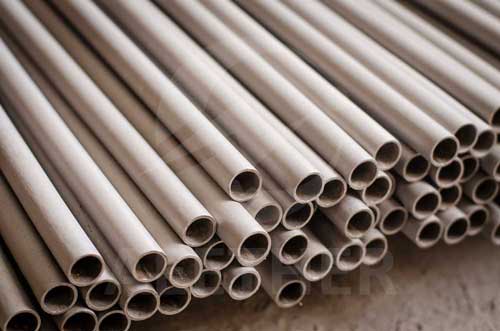
Incoloy 825
Pipes
Contact Now








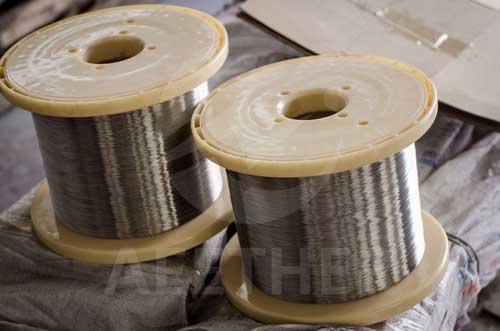


Incoloy 825 Introduction

Solid Solution
Strengthened Alloy
Resistance
Behavior
Corrosion Resistance
Sulfuric
Acid
Hydrochloric
Acid
Hydrofluoric
Acid
Phosphoric
Acid
Nitric
Acid
Organic
Acids
Alkalies
and Salts
Seawater
Overview
As a leading supplier & manufacturer in China, AEETHER supply cost-effective Incoloy 825 Products.
INCOLOY® alloy 825 (UNS N08825 / W.Nr. 2.4858) is a nickel-iron-chromium alloy with additions of molybdenum, copper, and titanium. The alloy’s chemical composition is designed to provide exceptional resistance to many corrosive environments. The nickel content is sufficient for resistance to chloride-ion stress-corrosion cracking. The nickel, in conjunction with the molybdenum and copper, also gives outstanding resistance to reducing environments such as those containing sulfuric and phosphoric acids. The molybdenum also aids resistance to pitting and crevice corrosion. The alloy’s chromium content confers resistance to a variety of oxidizing substances such as nitric acid, nitrates and oxidizing salt. The titanium addition serves, with an appropriate heat treatment, to stabilize the alloy against sensitization to intergranular corrosion.
The resistance of INCOLOY alloy 825 to general and localized corrosion under diverse conditions gives the alloy broad usefulness. Applications include chemical processing, pollution control, oil and gas recovery, acid production, pickling operations, nuclear fuel reprocessing, and handling of radioactive wastes. Applications for alloy 825 are similar to those for INCOLOY alloy 020.
Mechanical Properties
INCOLOY alloy 825 has good mechanical properties from cryogenic temperatures to moderately high temperatures. Exposure to temperatures above about 1000°F (540°C) can result in microstructural changes (phase formation) that significantly lower ductility and impact strength. For that reason, the alloy is not normally used at temperatures where creep-rupture properties are design factors.
INCOLOY alloy 825 has good impact strength at room temperature and retains its strength at cryogenic temperatures.
Corrosion Resistance
The outstanding attribute of INCOLOY alloy 825 is its high level of corrosion resistance. In both reducing and oxidize environments, the alloy resists general corrosion, pitting, crevice corrosion, intergranular corrosion, and stress-corrosion cracking. Some environments in which INCOLOY alloy 825 is particularly useful are sulfuric acid, phosphoric acid, sulfurcontaining flue gases, sour gas and oil wells, and sea water.
Incoloy 825 Chemical Composition
S ≤ 0.030%
Si ≤ 0.50%
C ≤ 0.05%
Mn ≤ 1.00%
Al ≤ 0.20%
Ti: 0.60% ~ 1.20%
Cu: 1.50% ~ 3.00%
Mo: 2.5% ~ 3.5%
Fe ≥ 22.0%
Cr: 19.5% ~ 23.5%
Ni: 38.0% ~ 46.0%
Popular Incoloy 825 Products
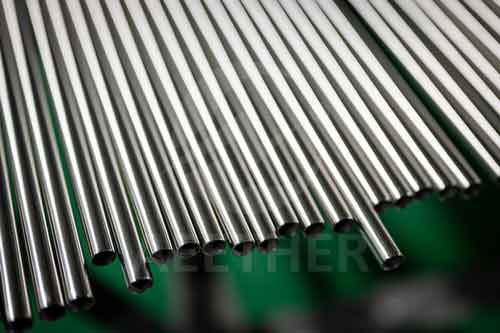
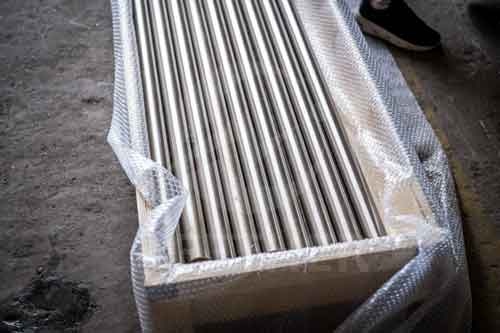
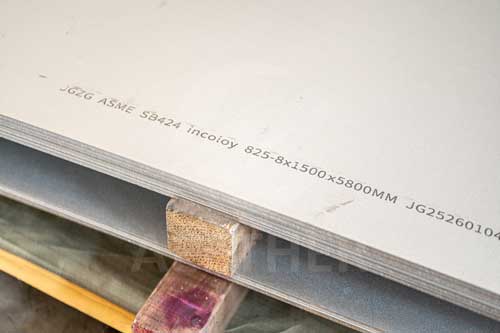
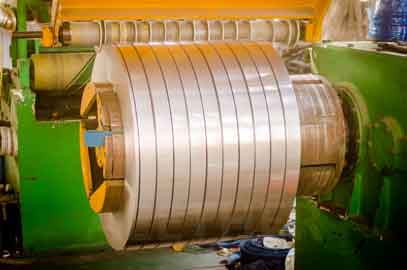
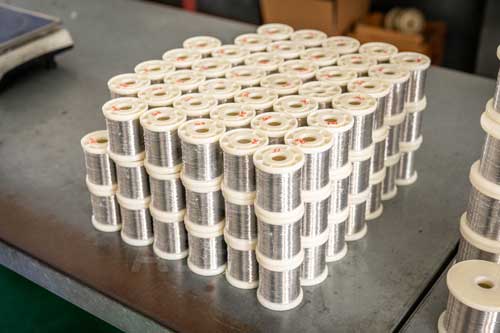
Try our Premium Products


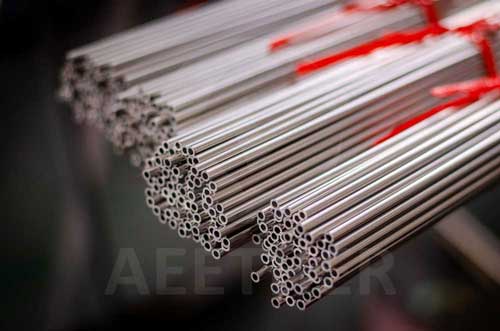


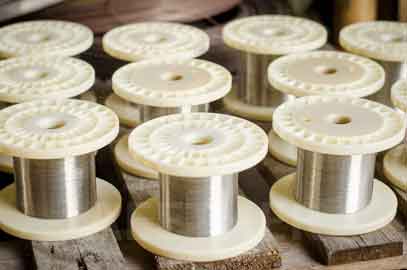


Get a Free Quote NOW
Incoloy 825 Standards
Data Sheet
Physical Properties
| Density | g/cm3 | 8.14 | |
|---|---|---|---|
| lb/in.3 | 0.294 | ||
| Melting Range | °F | 2500 - 2550 | |
| °C | 1370 - 1400 | ||
| Specific Heat | Btu/lb•°F | 0.105 | |
| J/kg•°C | 440 | ||
| Permeability at 70°F (21°C) and 200 oersted (15.9 kA/m) | 1.005 | ||
| Curie Temperature | °F | < -320 | |
| °C | < -196 | ||
Mechanical Properties
| Form and Condition | Tensile Strength | Yield Strength (0.2% Offset) |
Elongation | ||
|---|---|---|---|---|---|
| ksi | MPa | ksi | MPa | % | |
| Tubing, Annealed | 112 | 772 | 64 | 441 | 36 |
| Tubing, Cold Drawn | 145 | 1000 | 129 | 889 | 15 |
| Bar, Annealed | 100 | 690 | 47 | 324 | 45 |
| Plate, Annealed | 96 | 662 | 49 | 338 | 45 |
| Sheet, Annealed | 110 | 758 | 61 | 421 | 39 |
Incoloy 825 Applications


FAQ
What is the main difference between Incoloy 825 and Inconel 625?
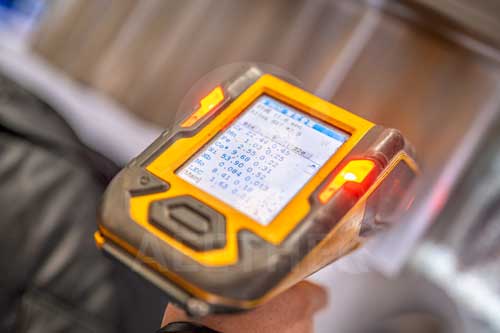
Their relationship is similar to that between Incoloy 800 and Inconel 600. Incoloy 825 can be considered a lower-cost version of Inconel 625. It has lower molybdenum and nickel content than Inconel 625, and contains more iron. Additionally, Incoloy 825 no longer contains niobium or tantalum, resulting in lower strength.
Could you briefly explain the purchasing process?
You can email your requirements directly to us at [email protected], or fill out the form at the bottom of the page to submit your request. Our sales team will send you a detailed quotation. If you are interested in our quote, please send us your purchase order (PO). We will provide you with a Proforma Invoice (PI) for payment. Once we receive the advance payment, we will begin production. We will notify you immediately upon completion of the materials.
How long does it take for you to provide a quote after receiving an inquiry?
We commit to responding to your inquiry within 24 hours, this is the service efficiency our sales team consistently maintains. Of course, if the inquiry information is incomplete and prevents us from providing a quote, we will promptly contact you to request additional details or explain the reason.
What are the roles of the main elements in the alloy?
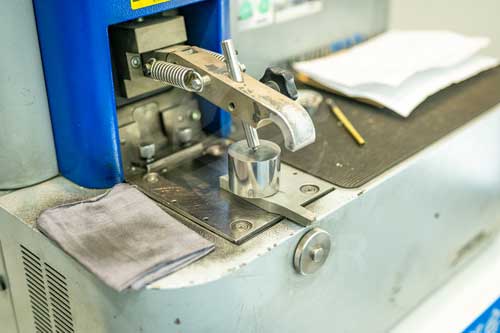
As with all nickel alloys, nickel serves to stabilize the alloy’s internal structure and provide it with a certain level of high-temperature resistance. The addition of chromium and molybdenum enhances the alloy’s resistance to oxidative and reductive corrosion, respectively. The addition of copper further improves the alloy’s corrosion resistance.
What exactly is solution strengthening?
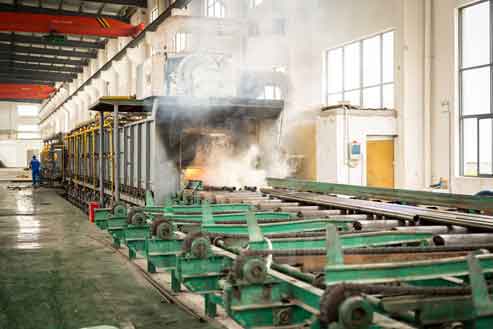
It describes the phenomenon where matrix elements in an alloy dissolve other elements into their own crystal lattice. This dissolution increases the alloy’s strength, hence the term “solution strengthening.” In alloy systems, nickel, cobalt, and iron are common matrix elements, while chromium, molybdenum, tungsten, and niobium are common solute elements.
What is your smelting capacity?
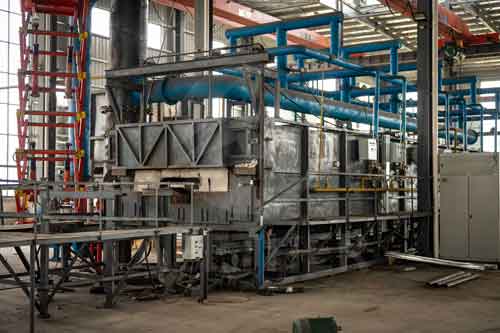
We have our own smelting workshop equipped with over 30 vacuum smelting furnaces and electroslag remelting furnaces, with capacities ranging from 50 kg to 5,000 kg. This combination of furnaces with diverse capacities allows us to accommodate orders of varying batch sizes while keeping the minimum order quantity at a lower level.
What are mechanical properties?
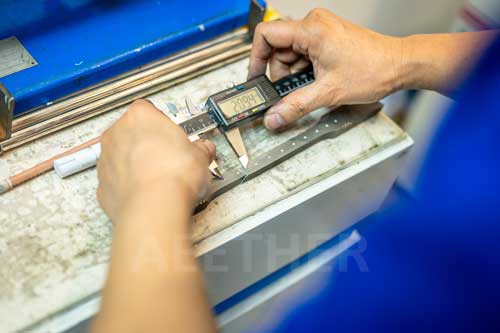
Mechanical properties refer to the characteristics a material exhibits when subjected to external forces. The most common mechanical property is tensile properties. Tensile strength, yield strength, elongation, and reduction of area are all typical tensile properties, each reflecting the material’s behavior under tensile stress from different perspectives.
Related Article






More Incoloy Grades +
800
S ≤ 0.015%
Si
Si ≤ 1.00%
C ≤ 0.10%
Mn
Mn ≤ 1.50%
Al
Al: 0.15% ~ 0.60%
Ti
Ti: 0.15% ~ 0.60%
Cu
Cu ≤ 0.75%
Fe
Fe ≥ 39.5%
Cr
Cr: 19.0% ~ 23.0%
Ni
Ni: 30.0% ~ 35.0%
800H
S ≤ 0.015%
Si
Si ≤ 1.00%
C
C: 0.05% ~ 0.10%
Mn
Mn ≤ 1.50%
Al
Al: 0.15% ~ 0.60%
Ti
Ti: 0.15% ~ 0.60%
Cu
Cu ≤ 0.75%
Fe
Fe ≥ 39.5%
Cr
Cr: 19.0% ~ 23.0%
Ni
Ni: 30.0% ~ 35.0%
800HT
S ≤ 0.015%
Si
Si ≤ 1.00%
C
C: 0.06% ~ 0.10%
Mn
Mn ≤ 1.50%
Al
Al + Ti: 0.85% ~ 1.20%
Ti
Al + Ti: 0.85% ~ 1.20%
Cu
Cu ≤ 0.75%
Fe
Fe ≥ 39.5%
Cr
Cr: 19.0% ~ 23.0%
Ni
Ni: 30.0% ~ 35.0%
803
S ≤ 0.015%
Si
Si ≤ 1.00%
C
C: 0.06% ~ 0.10%
Mn
Mn ≤ 1.50%
P ≤ 0.045%
Al
Al: 0.15% ~ 0.60%
Ti
Ti: 0.15% ~ 0.60%
Cu
Cu ≤ 0.75%
Fe
Fe: 29.4% ~ 39.4%
Cr
Cr: 25.0% ~ 29.0%
Ni
Ni: 32.0% ~ 37.0%
825
S ≤ 0.030%
Si
Si ≤ 0.50%
C ≤ 0.05%
Mn
Mn ≤ 1.00%
Al
Al ≤ 0.20%
Ti
Ti: 0.60% ~ 1.20%
Cu
Cu: 1.50% ~ 3.00%
Fe
Fe ≥ 22.0%
Mo
Mo: 2.5% ~ 3.5%
Cr
Cr: 19.5% ~ 23.5%
Ni
Ni: 38.0% ~ 46.0%
832
S ≤ 0.005%
Si
Si ≤ 0.70%
C ≤ 0.05%
Mn
Mn ≤ 0.40%
Al ≤ 0.15%
Ti
Ti ≤ 0.40%
Cu
Cu ≤ 0.75%
Fe
Fe: 60.6% ~ 68.9%
Mo
Mo ≤ 0.4%
Cr
Cr: 19.5% ~ 21.0%
Ni
Ni: 8.75% ~ 15.5%
864
S ≤ 0.015%
Si
Si: 0.6% ~ 1.0%
C
C ≤ 0.08%
Mn
Mn ≤ 1.00%
P ≤ 0.045%
Ti
Ti: 0.40% ~ 1.00%
Cu
Cu ≤ 0.75%
Fe
Fe: 29.1% ~ 43.9%
Mo
Mo: 4.0% ~ 4.8%
Cr
Cr: 20.0% ~ 25.0%
Ni
Ni: 30.0% ~ 38.0%
890
S ≤ 0.015%
Si
Si: 1.0% ~ 2.0%
C
C: 0.06% ~ 0.14%
Mn
Mn ≤ 1.50%
P ≤ 0.030%
Nb
Nb: 0.20% ~ 1.00%
Ta
Ta: 0.10% ~ 0.60%
Al
Al: 0.05% ~ 0.60%
Ti
Ti: 0.15% ~ 0.60%
Cu
Cu ≤ 0.75%
Fe
Fe ≥ 17.3%
Mo
Mo: 1.0% ~ 2.0%
Cr
Cr: 23.5% ~ 28.5%
Ni
Ni: 40.0% ~ 45.0%
903
Co
Co: 13.0% ~ 17.0%
Nb
Nb: 2.40% ~ 3.50%
Al
Al: 0.30% ~ 1.15%
Ti
Ti: 1.00% ~ 1.85%
Fe
Fe: 36.5% ~ 47.3%
Ni
Ni: 36.0% ~ 40.0%
907
Si
Si: 0.07% ~ 0.35%
Co
Co: 12.0% ~ 16.0%
Nb
Nb: 4.30% ~ 5.20%
Al
Al ≤ 0.20%
Ti
Ti: 1.30% ~ 1.80%
Fe
Fe: 36.5% ~ 47.1%
Ni
Ni: 35.0% ~ 40.0%
908
S ≤ 0.005%
Si
Si ≤ 0.50%
C ≤ 0.03%
Mn
Mn ≤ 1.00%
P ≤ 0.015%
B ≤ 0.012%
Co
Co ≤ 0.50%
Nb
Nb: 2.70% ~ 3.30%
Al
Al: 0.75% ~ 1.25%
Ti
Ti: 1.20% ~ 1.80%
Cu
Cu ≤ 0.50%
Fe
Fe ≥ 36.1%
Cr
Cr: 3.75% ~ 4.5%
Ni
Ni: 47.0% ~ 51.0%
909
S ≤ 0.015%
Si
Si: 0.25% ~ 0.50%
C ≤ 0.06%
Mn
Mn ≤ 1.00%
P ≤ 0.015%
B ≤ 0.012%
Co
Co: 12.0% ~ 16.0%
Nb
Nb: 4.30% ~ 5.20%
Ta ≤ 0.05%
Al ≤ 0.15%
Ti
Ti: 1.30% ~ 1.80%
Cu
Cu ≤ 0.50%
Fe
Fe: 36.3% ~ 46.9%
Cr
Cr ≤ 1.0%
Ni
Ni: 35.0% ~ 40.0%
925
S ≤ 0.030%
Si
Si ≤ 0.50%
C ≤ 0.03%
Mn
Mn ≤ 1.00%
P ≤ 0.030%
Nb
Nb ≤ 0.50%
Al
Al: 0.10% ~ 0.50%
Ti
Ti: 1.90% ~ 2.40%
Cu
Cu: 1.50% ~ 3.00%
Fe
Fe ≥ 22.0%
Mo
Mo: 2.5% ~ 3.5%
Cr
Cr: 19.5% ~ 22.5%
Ni
Ni: 42.0% ~ 46.0%
926
S ≤ 0.010%
Si
Si ≤ 0.50%
C ≤ 0.02%
Mn
Mn ≤ 2.00%
P ≤ 0.030%
N
N: 0.15% ~ 0.25%
Cu
Cu: 0.50% ~ 1.50%
Fe
Fe: 41.7% ~ 47.8%
Mo
Mo: 6.0% ~ 7.0%
Cr
Cr: 19.0% ~ 21.0%
Ni
Ni: 24.0% ~ 26.0%
945
S ≤ 0.030%
Si
Si ≤ 0.50%
C: 0.005% ~ 0.040%
Mn
Mn ≤ 1.00%
P ≤ 0.030%
Nb
Nb: 2.40% ~ 4.50%
Al
Al: 0.01% ~ 0.70%
Ti
Ti: 0.50% ~ 2.50%
Cu
Cu: 1.50% ~ 3.00%
Fe
Fe: 5.7% ~ 28.0%
Mo
Mo: 3.0% ~ 4.0%
Cr
Cr: 19.5% ~ 23.0%
Ni
Ni: 45.0% ~ 55.0%
945X
S ≤ 0.030%
Si
Si ≤ 0.50%
C: 0.005% ~ 0.030%
Mn
Mn ≤ 1.00%
P ≤ 0.030%
Nb
Nb: 3.50% ~ 4.50%
Al
Al: 0.01% ~ 0.70%
Ti
Ti: 0.50% ~ 2.50%
Cu
Cu: 1.50% ~ 3.00%
Fe
Fe: 6.2% ~ 20.4%
Mo
Mo: 3.0% ~ 4.0%
Cr
Cr: 19.5% ~ 22.5%
Ni
Ni: 50.0% ~ 55.0%
MA956
C
C ≤ 0.10%
Mn
Mn ≤ 0.30%
P ≤ 0.020%
Y2O3
Y2O3: 0.3% ~ 0.7%
Co
Co ≤ 0.30%
Al
Al: 3.75% ~ 5.75%
Ti
Ti: 0.20% ~ 0.60%
Cu ≤ 0.15%
Fe
Fe: 70.1% ~ 75.9%
Cr
Cr: 18.5% ~ 21.5%
Ni ≤ 0.5%
A-286
S ≤ 0.030%
Si
Si ≤ 1.00%
C
C ≤ 0.08%
Mn
Mn ≤ 2.00%
P ≤ 0.040%
B: 0.001% ~ 0.010%
V
V: 0.10% ~ 0.50%
Al
Al ≤ 0.35%
Ti
Ti: 1.90% ~ 2.35%
Fe
Fe: 49.1% ~ 56.0%
Mo
Mo: 1.00% ~ 1.50%
Cr
Cr: 13.5% ~ 16.0%
Ni
Ni: 24.0% ~ 27.0%
020
S ≤ 0.035%
Si
Si ≤ 1.00%
C ≤ 0.07%
Mn
Mn ≤ 2.00%
P ≤ 0.045%
Nb + Ta: 8*C% ~ 1.00%
Nb + Ta: 8*C% ~ 1.00%
Cu
Cu: 3.00% ~ 4.00%
Fe
Fe: 29.9% ~ 44.0%
Mo
Mo: 2.0% ~ 3.0%
Cr
Cr: 19.0% ~ 21.0%
Ni
Ni: 32.0% ~ 38.0%
028
S ≤ 0.030%
Si
Si ≤ 1.00%
C ≤ 0.03%
Mn
Mn ≤ 2.50%
P ≤ 0.030%
Cu
Cu: 0.60% ~ 1.40%
Fe
Fe: 29.0% ~ 36.8%
Mo
Mo: 3.0% ~ 4.0%
Cr
Cr: 26.0% ~ 28.0%
Ni
Ni: 30.0% ~ 34.0%
DS
S ≤ 0.030%
Si
Si: 1.90% ~ 2.60%
C
C ≤ 0.10%
Mn
Mn: 0.80% ~ 1.50%
Co
Ni + Co: 34.5% ~ 41.0%
Ti
Ti ≤ 0.20%
Cu
Cu ≤ 0.50%
Fe
Fe: 35.1% ~ 45.0%
Cr
Cr: 17.0% ~ 19.0%
Ni
Ni + Co: 34.5% ~ 41.0%
330
S ≤ 0.030%
Si
Si: 0.75% ~ 1.50%
C
C ≤ 0.08%
Mn
Mn ≤ 2.00%
P ≤ 0.030%
Cu
Cu ≤ 1.00%
Fe
Fe: 39.4% ~ 46.1%
Cr
Cr: 17.0% ~ 20.0%
Ni
Ni: 34.0% ~ 37.0%
25-6HN
S ≤ 0.030%
Si
Si ≤ 1.00%
C ≤ 0.03%
Mn
Mn ≤ 2.00%
P ≤ 0.040%
N
N: 0.18% ~ 0.25%
Cu
Cu ≤ 0.75%
Fe
Fe: 41.4% ~ 50.3%
Mo
Mo: 6.0% ~ 7.0%
Cr
Cr: 20.0% ~ 22.0%
Ni
Ni: 23.5% ~ 25.5%
27-7MO
S ≤ 0.010%
Si
Si ≤ 0.50%
C ≤ 0.02%
Mn
Mn ≤ 3.00%
P ≤ 0.030%
N
N: 0.30% ~ 0.40%
Cu
Cu: 0.50% ~ 1.50%
Fe
Fe: 35.5% ~ 42.6%
Mo
Mo: 6.5% ~ 8.0%
Cr
Cr: 20.5% ~ 23.0%
Ni
Ni: 26.0% ~ 28.0%