
Monel Alloy
K-500

Get a Free Quote NOW
Send Inquiry and Get Our Latest Full Set Data Sheet
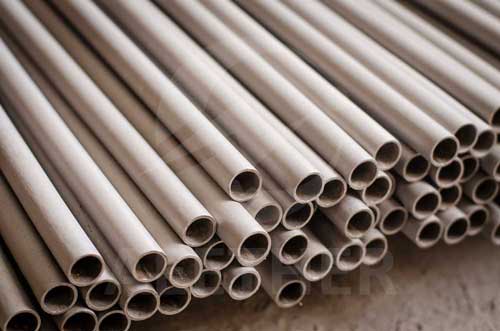
Monel K-500
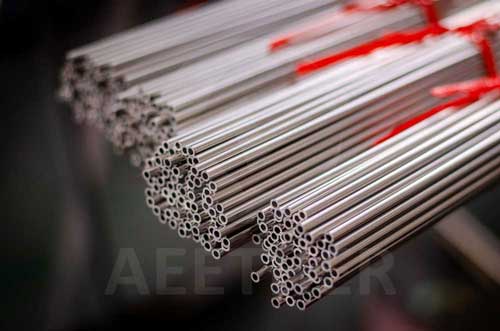
Pipes
Contact Now


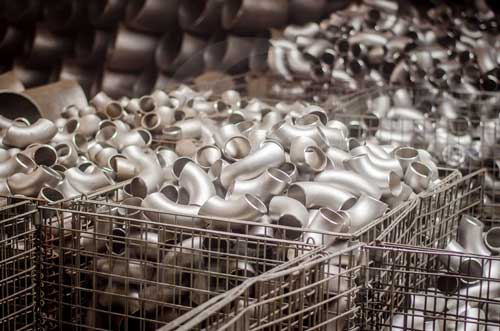


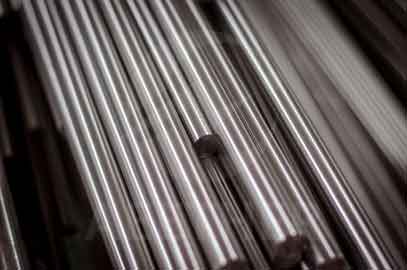


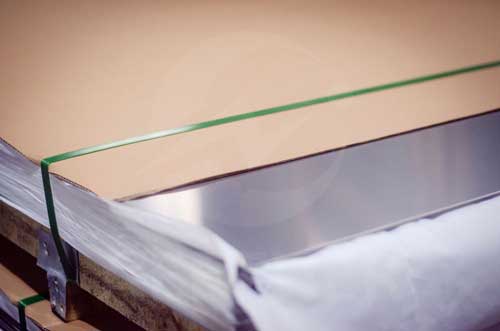


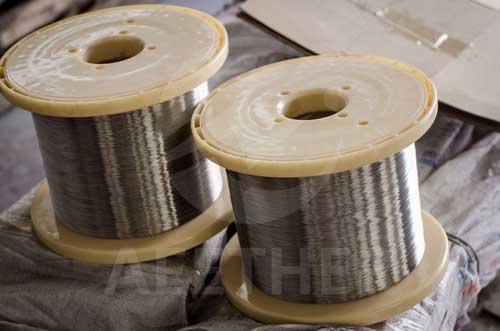


Monel K-500 Introduction

Precipitation
Strengthened Alloy
Resistance
Behavior
Corrosion Resistance
Sulfuric
Acid
Hydrochloric
Acid
Hydrofluoric
Acid
Phosphoric
Acid
Nitric
Acid
Organic
Acids
Alkalies
and Salts
Seawater
Overview
As a leading supplier & manufacturer in China, AEETHER supply cost-effective Monel K-500 Products.
MONEL® alloy K-500 (UNS N05500 / W.Nr. 2.4375) is a nickel-copper alloy which combines the excellent corrosion resistance of MONEL alloy 400 with the added advantages of greater strength and hardness. The increased properties are obtained by adding aluminum and titanium to the nickel-copper base, and by heating under controlled conditions so that submicroscopic particles of Ni3 (Ti, Al) are precipitated throughout the matrix. The thermal processing used to effect precipitation is commonly called age hardening or aging.
Typical applications for MONEL alloy K-500 products are chains and cables, fasteners and springs for marine service; pump and valve components for chemical processing; doctor blades and scrapers for pulp processing in paper production; oil well drill collars and instruments, pump shafts and impellers, non-magnetic housings, safety lifts and valves for oil and gas production; and sensors and other electronic components.
A useful characteristic of the alloy is that it is virtually nonmagnetic, even at quite low temperatures. It is possible, however, to develop a magnetic layer on the surface of the material during processing. Aluminum and copper may be selectively oxidized during heating, leaving a magnetic nickel-rich film on the outside of the piece. The effect is particularly noticeable on thin wire or strip where there is a high ratio of surface to weight. The magnetic film can be removed by pickling or bright dipping in acid, and the nonmagnetic properties of the material will be restored.
The combination of low magnetic permeability, high strength and good corrosion resistance has been used to advantage in a number of applications, notably oil-well surveying equipment and electronic components.
MONEL alloy K-500 has been found to have exceptionally good dimensional stability, both in long-time exposure tests and in cyclic tests. This property of the alloy has led to its use in high-precision devices, such as gyros. Age hardening causes an initial volume contraction. An annealed rod contracted 2.5 x 10⁻⁴ in. per in. during aging.
Mechanical Properties
The low-temperature properties of MONEL alloy K-500 are outstanding. Tensile and yield strengths increase with decrease in temperature while ductility and toughness are virtually unimpaired. No ductile-to-brittle transformation occurs even at temperatures as low as that of liquid hydrogen. Thus the alloy is suitable for many cryogenic applications.
Properties of alloy K-500 base metal and welded sheet at temperatures down to -423°F. Welds can be produced with the strength of agehardened base metal with no serious loss in ductility if aging treatments are performed after welding annealed material. Welding of age-hardened material should be avoided because of greatly reduced ductility.
Corrosion Resistance
The corrosion resistance of MONEL alloy K-500 is substantially equivalent to that of alloy 400 except that, when in the age-hardened condition, alloy K-500 has a greater tendency toward stress-corrosion cracking in some environments.
MONEL alloy K-500 has been found to be resistant to a sour-gas environment. After 6 days of continuous immersion in saturated (3500 ppm) hydrogen sulfide solutions at acidic and basic pHs (ranging from 1.0 to 11.0), U-bend specimens of age-hardened sheet showed no cracking. Hardness of the specimens ranged from 28 to 40 Rc.
The combination of very low corrosion rates in highvelocity sea water and high strength make alloy K-500 particularly suitable for shafts of centrifugal pumps in marine service. In stagnant or slow-moving sea water, fouling may occur followed by pitting, but this pitting slows down after a fairly rapid initial attack.
Monel K-500 Chemical Composition
S ≤ 0.010%
Si ≤ 0.50%
C ≤ 0.18%
Mn ≤ 1.50%
Fe ≤ 2.0%
Al: 2.30% ~ 3.15%
Ti: 0.35% ~ 0.85%
Cu: 27.0% ~ 33.0%
Ni ≥ 63.0%
Try our Premium Products






Get a Free Quote NOW
Monel K-500 Standards
Data Sheet
Physical Properties
| Density | g/cm3 | 8.44 | |
|---|---|---|---|
| lb/in.3 | 0.305 | ||
| Melting Range | °F | 2400 - 2460 | |
| °C | 1315 - 1350 | ||
| Modulus of Elasticity | Tension | 103 ksi | 26.0 |
| Torsion | 103 ksi | 9.5 | |
| Poisson’s Ratio | Aged material at room temperature | 0.32 | |
Mechanical Properties
| Form and Condition | Tensile Strength | Yield Strength (0.2% Offset) |
Elongation, % |
Hardness | |||
|---|---|---|---|---|---|---|---|
| ksi | MPa | ksi | MPa | Brinell (3000-kg) |
Rockwell B | ||
| Rod and Bar | |||||||
| Hot-Finished | 90-155 | 621-1069 | 40-110 | 276-758 | 45-20 | 140-315 | 75B-35C |
| Hot-Finished, Aged | 140-190 | 965-1310 | 100-150 | 690-1034 | 30-20 | 265-346 | 27-38C |
| Hot-Finished, Annealed | 90-110 | 621-758 | 40-60 | 276-414 | 45-25 | 140-185 | 75-90B |
| Hot-Finished, Annealed and Aged | 130-165 | 896-1138 | 85-120 | 586-827 | 35-20 | 250-315 | 24-35C |
| Cold-Drawn, As-Drawn | 100-140 | 690-965 | 70-125 | 483-862 | 35-13 | 175-260 | 88B-26C |
| Cold-Drawn, Aged | 135-185 | 931-1276 | 95-160 | 655-1103 | 30-15 | 255-370 | 25-41C |
| Cold-Drawn, Annealed | 90-110 | 621-758 | 40-60 | 276-414 | 50-25 | 140-185 | 75-90B |
| Cold-Drawn, Annealed and Aged | 130-190 | 896-1310 | 85-120 | 586-827 | 30-20 | 250-315 | 24-35C |
| Sheet, Cold-Rolled | |||||||
| Annealed | 90-105 | 621-724 | 40-65 | 276-448 | 45-25 | - | 85B max. |
| Strip, Cold-Rolled | |||||||
| Annealed | 90-105 | 621-724 | 40-65 | 276-448 | 45-25 | - | 85B max. |
| Annealed and Aged | 130-170 | 896-1172 | 90-120 | 621-827 | 25-15 | - | 24C min. |
| Spring Temper | 145-165 | 1000-1138 | 130-160 | 896-1103 | 8-3 | - | 25C min. |
| Spring Temper, Aged | 170-220 | 1172-1517 | 130-195 | 896-1345 | 10-5 | - | 34C min. |
| Tube and Pipe, Seamless | |||||||
| Cold-Drawn, Annealed | 90-110 | 621-758 | 40-65 | 276-448 | 45-25 | - | 90B max. |
| Cold-Drawn, Annealed and Aged | 130-180 | 896-1241 | 85-120 | 586-827 | 30-15 | - | 24-36C |
| Cold-Drawn, As-Drawn | 110-160 | 758-1103 | 85-140 | 586-965 | 15-2 | - | 95B-32C |
| Cold-Drawn, As-Drawn, Aged | 140-220 | 965-1517 | 100-200 | 690-1379 | 25-3 | - | 27-40C |
| Plate | |||||||
| Hot-Finished | 90-135 | 621-931 | 40-110 | 276-758 | 45-20 | 140-260 | 75B-26C |
| Hot-Finished, Aged | 140-180 | 965-1241 | 100-135 | 690-981 | 30-20 | 265-337 | 27-37C |
| Wire, Cold Drawn | |||||||
| Annealed | 80-110 | 552-758 | 35-65 | 241-448 | 40-20 | - | - |
| Annealed and Aged | 120-150 | 827-1034 | 90-110 | 621-758 | 30-15 | - | - |
| Spring Temper | 145-190 | 1000-1310 | 130-180 | 896-1241 | 5-2 | - | - |
| Spring Temper, Aged | 160-200 | 1103-1379 | 140-190 | 965-1310 | 8-3 | - | - |
Monel K-500 Applications


FAQ
What is the difference between Monel K-500 and Monel 400?
Both Monel K-500 and Monel 400 are nickel-copper alloys. The difference is that Monel K-500 is a precipitation-strengthened alloy, while Monel 400 is a solid solution-strengthened alloy. Therefore, Monel K-500 has higher strength than the latter.
What smelting method do you use?
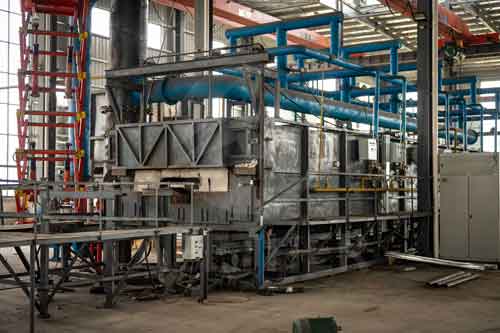
We use a vacuum induction furnace (VIM) + electroslag remelting (ESR) smelting method. In fact, all nickel alloys should use this smelting method, as it ensures the purity of the alloy. If other smelting methods are used, performance problems are likely to occur during the production process.
Is Monel K-500 suitable for room temperature or high temperature applications?
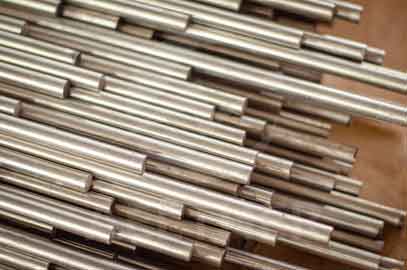
Monel K-500 is a nickel alloy, but it is not a superalloy. Therefore, its advantage is not in high-temperature applications. Monel K-500 is mainly used in high-corrosion and high-pressure applications at room temperature. It is especially suitable for fasteners in seawater.
How do you determine if the composition meets the standards?
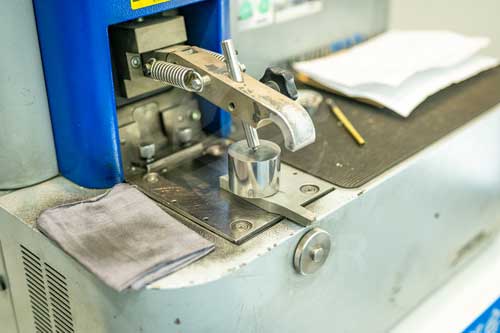
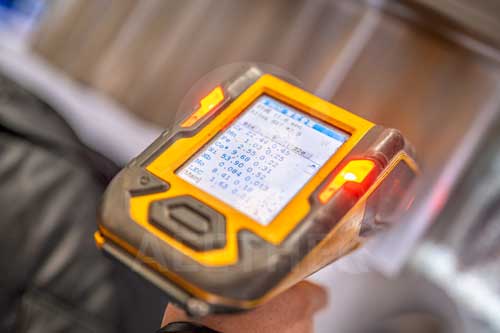
During the smelting stage, we strictly control the material proportions and conduct chemical analysis. After the materials are completed, we perform PMI testing on the finished product. If you are still concerned, we can also send the materials to a third-party laboratory for final chemical analysis.
What do UNS and W.Nr. mean?
UNS and W.Nr are numbering systems established to standardize grade designation. Their purpose is to ensure that one grade corresponds to only one number to avoid ambiguity in naming. Generally, US standards use UNS numbers while European standards use W.Nr numbers.
What is precipitation strengthening?
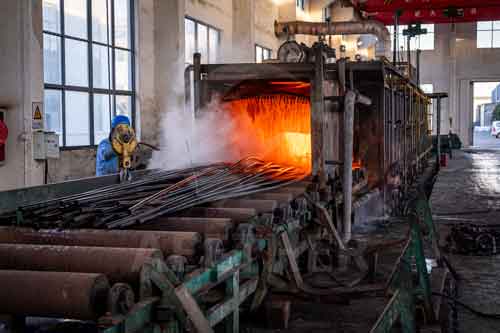
Precipitation strengthening is a property of alloys, possessed only by some alloys: they can increase their strength through a heat treatment called aging. The key elements determining precipitation strengthening are aluminum, titanium, niobium, and tantalum.
What does tensile strength mean?
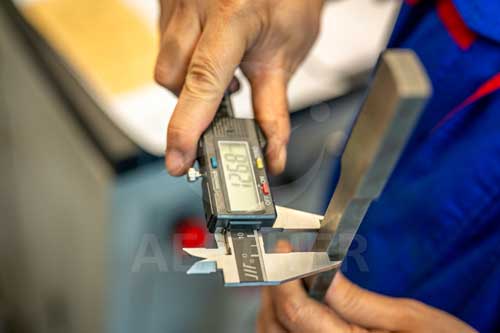
Tensile strength is an indicator of a material's strength. It determines the stress at which a material will break. Therefore, if your application requires materials that are not easily broken, tensile strength is an important indicator. Of course, tensile strength also reflects the overall strength of the material.
Will you arrange shipping?
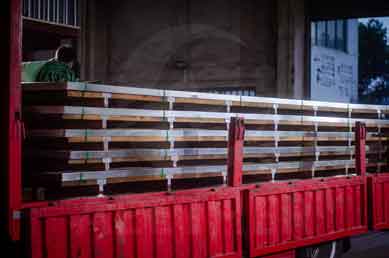
By default, we use FOB pricing terms. In this case, you are free to arrange for your freight forwarder to transport your goods. We will cooperate with them to handle local formalities. Of course, if you need us to arrange transportation for you, that's also fine, and we will provide you with a corresponding quote.
Related Article




More Monel Grades +
400
S ≤ 0.024%
Si
Si ≤ 0.50%
C
C ≤ 0.30%
Mn
Mn ≤ 2.00%
Fe
Fe ≤ 2.5%
Cu
Cu: 28.0% ~ 34.0%
Ni
Ni ≥ 63.0%
401
S ≤ 0.015%
Si
Si ≤ 0.25%
C
C ≤ 0.10%
Mn
Mn ≤ 2.25%
Co
Co ≤ 0.25%
Fe
Fe ≤ 0.75%
Cu
Cu: 51.4% ~ 56.4%
Ni
Ni: 40.0% ~ 45.0%
404
S ≤ 0.024%
Si ≤ 0.10%
C
C ≤ 0.15%
Mn ≤ 0.10%
Ni + Co: 52.0% ~ 57.0%
Al ≤ 0.05%
Fe
Fe ≤ 0.50%
Cu
Cu: 42.1% ~ 47.1%
Ni
Ni: 52.0% ~ 57.0%
R-405
S: 0.025% ~ 0.060%
Si
Si ≤ 0.50%
C
C ≤ 0.30%
Mn
Mn ≤ 2.00%
Fe
Fe ≤ 2.5%
Cu
Cu: 28.0% ~ 34.0%
Ni
Ni ≥ 63.0%
K-500
S ≤ 0.010%
Si
Si ≤ 0.50%
C
C ≤ 0.18%
Mn
Mn ≤ 1.50%
Al
Al: 2.30% ~ 3.15%
Ti
Ti: 0.35% ~ 0.85%
Fe
Fe ≤ 2.0%
Cu
Cu: 27.0% ~ 33.0%
Ni
Ni ≥ 63.0%
502
S ≤ 0.010%
Si
Si ≤ 0.50%
C
C ≤ 0.10%
Mn
Mn ≤ 1.50%
Al
Al: 2.50% ~ 3.50%
Ti
Ti ≤ 0.50%
Fe
Fe ≤ 2.0%
Cu
Cu: 21.9% ~ 29.9%
Ni
Ni: 63.0% ~ 70.0%