
Incoloy Alloy
925

Get a Free Quote NOW
Send Inquiry and Get Our Latest Full Set Data Sheet








Incoloy 925 Introduction

Precipitation
Strengthened Alloy
Resistance
Behavior
Overview
As a leading supplier & manufacturer in China, AEETHER supply cost-effective Incoloy 925 Products.
INCOLOY® alloy 925 (UNS N09925) is an agehardenable nickel-iron-chromium alloy with additions of molybdenum, copper, titanium and aluminum. The alloy’s chemical composition is designed to provide a combination of high strength and excellent corrosion resistance. The nickel content is sufficient for protection against chloride-ion stresscorrosion cracking. The nickel, in conjunction with the molybdenum and copper, also gives outstanding resistance to reducing chemicals. The molybdenum aids resistance to pitting and crevice corrosion. The alloy’s chromium content provides resistance to oxidizing environments. The titanium and aluminum additions cause a strengthening reaction during heat treatment.
INCOLOY alloy 925 is used in various applications requiring a combination of high strength and corrosion resistance. Because of the alloy’s resistance to sulfide stress cracking and stress-corrosion cracking in “sour” (H2S containing) crude oil and natural gas, it is used for down-hole and surface gaswell components including tubular products, valves, hangers, landing nipples, tool joints and packers. The alloy is also useful for fasteners, marine and pump shafting and high-strength piping systems.
Corrosion Resistance
INCOLOY alloy 925 has a high level of corrosion resistance. In both reducing and oxidizing environments, the alloy resists general corrosion, pitting, crevice corrosion, intergranular corrosion and stress-corrosion cracking. Some environments in which INCOLOY alloy 925 is particularly useful are “sour” (H2S containing) crude oil and natural gas, sulfuric acid, phosphoric acid, and seawater.
The tests involve exposure of stressed C-ring specimens (made from a portion of tubing cross section) to a solution containing hydrogen sulfide, sodium chloride and acetic acid.
Incoloy 925 Chemical Composition
S ≤ 0.030%
Si ≤ 0.50%
C ≤ 0.03%
Mn ≤ 1.00%
P ≤ 0.030%
Al: 0.10% ~ 0.50%
Ti: 1.90% ~ 2.40%
Cu: 1.50% ~ 3.00%
Nb ≤ 0.50%
Mo: 2.5% ~ 3.5%
Fe ≥ 22.0%
Cr: 19.5% ~ 22.5%
Ni: 42.0% ~ 46.0%
Try our Premium Products


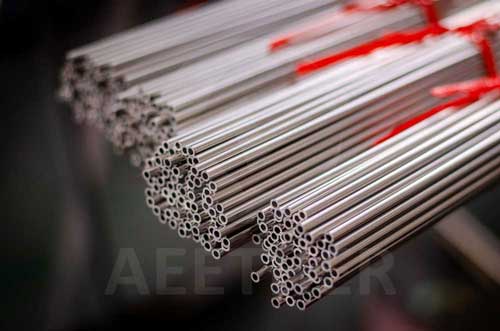


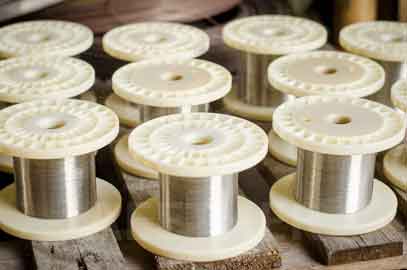


Get a Free Quote NOW
Incoloy 925 Standards
Data Sheet
Physical Properties
| Density | g/cm3 | 8.08 | |
|---|---|---|---|
| lb/in.3 | 0.292 | ||
| Melting Range | °F | 2392 - 2490 | |
| °C | 1311 - 1366 | ||
| Electrical Resistivity | ohm-circ mil/ft | 701 | |
| μΩ-m | 1.17 | ||
| Permeability at 200 oersted (15.9 kA/m) | 1.001 | ||
Mechanical Properties
| Form/Condition | Tensile Strength | Yield Strength (0.2% Offset) |
Elongation | Hardness | ||
|---|---|---|---|---|---|---|
| ksi | MPa | ksi | MPa | % | Rockwell | |
| Round/Solution-Annealed | 99.3 | 685 | 39.3 | 271 | 56 | 76 B |
| Round/Solution-Annealed and Aged | 167.3 | 1154 | 120.6 | 832 | 27 | 32 C |
| Cold Drawn Tubing/Solution-Annealed and Aged | 172.5 | 1189 | 120.4 | 830 | 27 | 35 C |
Incoloy 925 Applications


FAQ
What is the difference between Incoloy 925 and Incoloy 825?
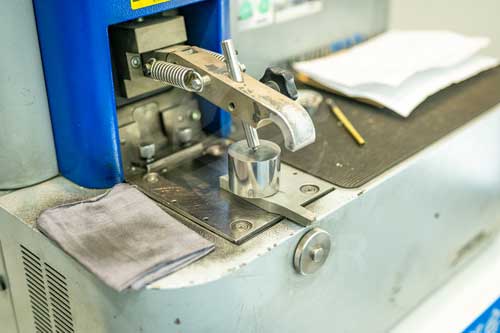
Incoloy 925 is actually a precipitation-strengthened version of Incoloy 825. Their nickel, chromium, and iron content is almost identical. The only difference is that Incoloy 925 contains more aluminum and titanium, allowing it to undergo precipitation strengthening through aging treatment, significantly improving tensile strength and yield strength.
Do you have your own smelting capabilities?
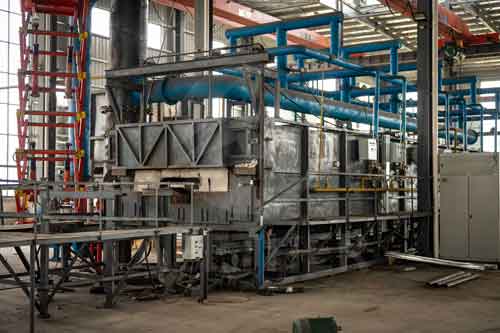
Yes, we are equipped with over 30 vacuum smelting furnaces and electroslag remelting furnaces, with specifications including 50kg, 200kg, 1000kg, and 5000kg. This equipment configuration allows us to flexibly adjust production according to your quantity requirements, while also allowing for lower minimum order quantities.
What causes differences in the mechanical properties of different products?
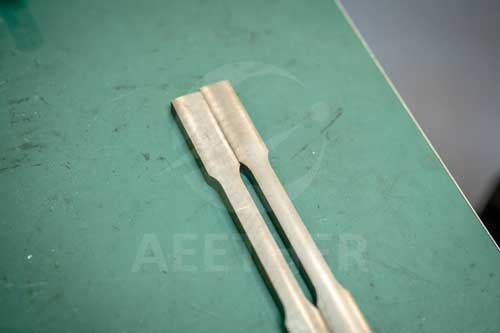
Differences in mechanical properties can be caused by several factors:
1) Different processes are used for different products;
2) Different cold working methods and heat treatment processes;
3) Different dimensions.
Can you explain what precipitation strengthening means?
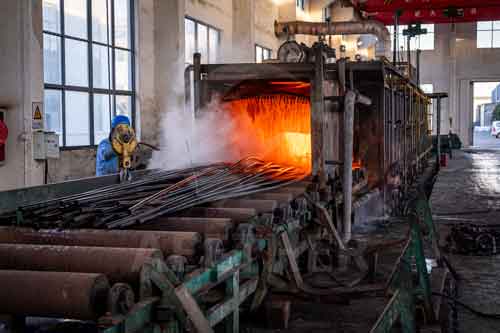
Precipitation strengthening is a unique property characteristic of some alloys, meaning that the strength of an alloy can be increased through aging heat treatment. The fine strengthening phases precipitated during aging effectively hinder dislocation movement, thus strengthening the material. Aluminum, titanium, niobium, and tantalum are key alloying elements that determine whether precipitation strengthening can be achieved.
Can I only purchase the product forms listed on this page?
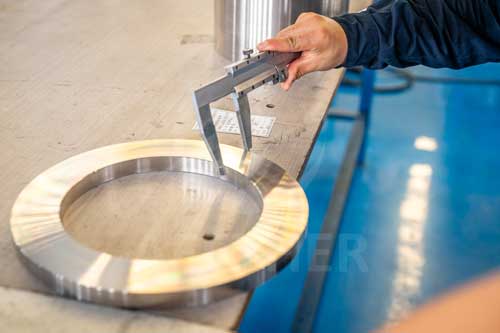
Of course not. We can also customize products according to your needs. For example, seamless tubes can be made into U-shaped tubes, and round bars or plates can be cut into disks. We can also customize rings and blocks, not limited to those listed on this page.
What does elongation mean?
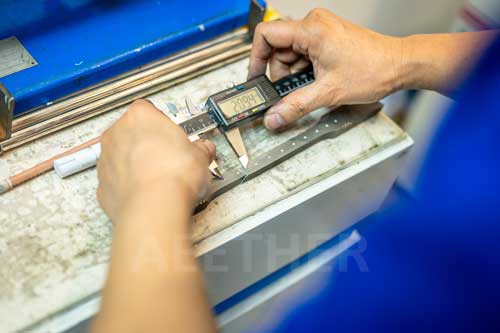
It refers to the percentage of a material's length elongated under tensile force until fracture. Elongation is a key indicator of a material's plasticity. Higher elongation indicates better plasticity. However, generally, there is a certain constraint between plasticity and strength; materials with better plasticity usually have lower strength.
What is the difference between physical properties and mechanical properties?
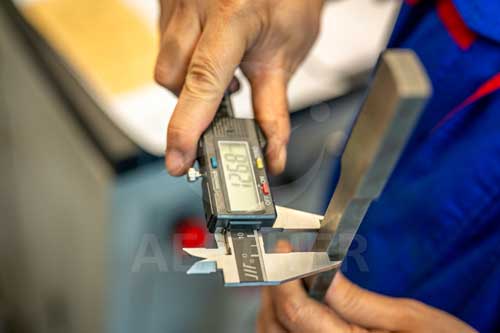
Physical properties are inherent attributes of a material, such as melting point, density, and electromagnetic properties. The biggest difference between physical properties and mechanical properties is that physical properties are unaffected by processing; regardless of how the material is treated, these properties remain stable.
Related Article


More Incoloy Grades +
800
S ≤ 0.015%
Si
Si ≤ 1.00%
C ≤ 0.10%
Mn
Mn ≤ 1.50%
Al
Al: 0.15% ~ 0.60%
Ti
Ti: 0.15% ~ 0.60%
Cu
Cu ≤ 0.75%
Fe
Fe ≥ 39.5%
Cr
Cr: 19.0% ~ 23.0%
Ni
Ni: 30.0% ~ 35.0%
800H
S ≤ 0.015%
Si
Si ≤ 1.00%
C
C: 0.05% ~ 0.10%
Mn
Mn ≤ 1.50%
Al
Al: 0.15% ~ 0.60%
Ti
Ti: 0.15% ~ 0.60%
Cu
Cu ≤ 0.75%
Fe
Fe ≥ 39.5%
Cr
Cr: 19.0% ~ 23.0%
Ni
Ni: 30.0% ~ 35.0%
800HT
S ≤ 0.015%
Si
Si ≤ 1.00%
C
C: 0.06% ~ 0.10%
Mn
Mn ≤ 1.50%
Al
Al + Ti: 0.85% ~ 1.20%
Ti
Al + Ti: 0.85% ~ 1.20%
Cu
Cu ≤ 0.75%
Fe
Fe ≥ 39.5%
Cr
Cr: 19.0% ~ 23.0%
Ni
Ni: 30.0% ~ 35.0%
803
S ≤ 0.015%
Si
Si ≤ 1.00%
C
C: 0.06% ~ 0.10%
Mn
Mn ≤ 1.50%
P ≤ 0.045%
Al
Al: 0.15% ~ 0.60%
Ti
Ti: 0.15% ~ 0.60%
Cu
Cu ≤ 0.75%
Fe
Fe: 29.4% ~ 39.4%
Cr
Cr: 25.0% ~ 29.0%
Ni
Ni: 32.0% ~ 37.0%
825
S ≤ 0.030%
Si
Si ≤ 0.50%
C ≤ 0.05%
Mn
Mn ≤ 1.00%
Al
Al ≤ 0.20%
Ti
Ti: 0.60% ~ 1.20%
Cu
Cu: 1.50% ~ 3.00%
Fe
Fe ≥ 22.0%
Mo
Mo: 2.5% ~ 3.5%
Cr
Cr: 19.5% ~ 23.5%
Ni
Ni: 38.0% ~ 46.0%
832
S ≤ 0.005%
Si
Si ≤ 0.70%
C ≤ 0.05%
Mn
Mn ≤ 0.40%
Al ≤ 0.15%
Ti
Ti ≤ 0.40%
Cu
Cu ≤ 0.75%
Fe
Fe: 60.6% ~ 68.9%
Mo
Mo ≤ 0.4%
Cr
Cr: 19.5% ~ 21.0%
Ni
Ni: 8.75% ~ 15.5%
864
S ≤ 0.015%
Si
Si: 0.6% ~ 1.0%
C
C ≤ 0.08%
Mn
Mn ≤ 1.00%
P ≤ 0.045%
Ti
Ti: 0.40% ~ 1.00%
Cu
Cu ≤ 0.75%
Fe
Fe: 29.1% ~ 43.9%
Mo
Mo: 4.0% ~ 4.8%
Cr
Cr: 20.0% ~ 25.0%
Ni
Ni: 30.0% ~ 38.0%
890
S ≤ 0.015%
Si
Si: 1.0% ~ 2.0%
C
C: 0.06% ~ 0.14%
Mn
Mn ≤ 1.50%
P ≤ 0.030%
Nb
Nb: 0.20% ~ 1.00%
Ta
Ta: 0.10% ~ 0.60%
Al
Al: 0.05% ~ 0.60%
Ti
Ti: 0.15% ~ 0.60%
Cu
Cu ≤ 0.75%
Fe
Fe ≥ 17.3%
Mo
Mo: 1.0% ~ 2.0%
Cr
Cr: 23.5% ~ 28.5%
Ni
Ni: 40.0% ~ 45.0%
903
Co
Co: 13.0% ~ 17.0%
Nb
Nb: 2.40% ~ 3.50%
Al
Al: 0.30% ~ 1.15%
Ti
Ti: 1.00% ~ 1.85%
Fe
Fe: 36.5% ~ 47.3%
Ni
Ni: 36.0% ~ 40.0%
907
Si
Si: 0.07% ~ 0.35%
Co
Co: 12.0% ~ 16.0%
Nb
Nb: 4.30% ~ 5.20%
Al
Al ≤ 0.20%
Ti
Ti: 1.30% ~ 1.80%
Fe
Fe: 36.5% ~ 47.1%
Ni
Ni: 35.0% ~ 40.0%
908
S ≤ 0.005%
Si
Si ≤ 0.50%
C ≤ 0.03%
Mn
Mn ≤ 1.00%
P ≤ 0.015%
B ≤ 0.012%
Co
Co ≤ 0.50%
Nb
Nb: 2.70% ~ 3.30%
Al
Al: 0.75% ~ 1.25%
Ti
Ti: 1.20% ~ 1.80%
Cu
Cu ≤ 0.50%
Fe
Fe ≥ 36.1%
Cr
Cr: 3.75% ~ 4.5%
Ni
Ni: 47.0% ~ 51.0%
909
S ≤ 0.015%
Si
Si: 0.25% ~ 0.50%
C ≤ 0.06%
Mn
Mn ≤ 1.00%
P ≤ 0.015%
B ≤ 0.012%
Co
Co: 12.0% ~ 16.0%
Nb
Nb: 4.30% ~ 5.20%
Ta ≤ 0.05%
Al ≤ 0.15%
Ti
Ti: 1.30% ~ 1.80%
Cu
Cu ≤ 0.50%
Fe
Fe: 36.3% ~ 46.9%
Cr
Cr ≤ 1.0%
Ni
Ni: 35.0% ~ 40.0%
925
S ≤ 0.030%
Si
Si ≤ 0.50%
C ≤ 0.03%
Mn
Mn ≤ 1.00%
P ≤ 0.030%
Nb
Nb ≤ 0.50%
Al
Al: 0.10% ~ 0.50%
Ti
Ti: 1.90% ~ 2.40%
Cu
Cu: 1.50% ~ 3.00%
Fe
Fe ≥ 22.0%
Mo
Mo: 2.5% ~ 3.5%
Cr
Cr: 19.5% ~ 22.5%
Ni
Ni: 42.0% ~ 46.0%
926
S ≤ 0.010%
Si
Si ≤ 0.50%
C ≤ 0.02%
Mn
Mn ≤ 2.00%
P ≤ 0.030%
N
N: 0.15% ~ 0.25%
Cu
Cu: 0.50% ~ 1.50%
Fe
Fe: 41.7% ~ 47.8%
Mo
Mo: 6.0% ~ 7.0%
Cr
Cr: 19.0% ~ 21.0%
Ni
Ni: 24.0% ~ 26.0%
945
S ≤ 0.030%
Si
Si ≤ 0.50%
C: 0.005% ~ 0.040%
Mn
Mn ≤ 1.00%
P ≤ 0.030%
Nb
Nb: 2.40% ~ 4.50%
Al
Al: 0.01% ~ 0.70%
Ti
Ti: 0.50% ~ 2.50%
Cu
Cu: 1.50% ~ 3.00%
Fe
Fe: 5.7% ~ 28.0%
Mo
Mo: 3.0% ~ 4.0%
Cr
Cr: 19.5% ~ 23.0%
Ni
Ni: 45.0% ~ 55.0%
945X
S ≤ 0.030%
Si
Si ≤ 0.50%
C: 0.005% ~ 0.030%
Mn
Mn ≤ 1.00%
P ≤ 0.030%
Nb
Nb: 3.50% ~ 4.50%
Al
Al: 0.01% ~ 0.70%
Ti
Ti: 0.50% ~ 2.50%
Cu
Cu: 1.50% ~ 3.00%
Fe
Fe: 6.2% ~ 20.4%
Mo
Mo: 3.0% ~ 4.0%
Cr
Cr: 19.5% ~ 22.5%
Ni
Ni: 50.0% ~ 55.0%
MA956
C
C ≤ 0.10%
Mn
Mn ≤ 0.30%
P ≤ 0.020%
Y2O3
Y2O3: 0.3% ~ 0.7%
Co
Co ≤ 0.30%
Al
Al: 3.75% ~ 5.75%
Ti
Ti: 0.20% ~ 0.60%
Cu ≤ 0.15%
Fe
Fe: 70.1% ~ 75.9%
Cr
Cr: 18.5% ~ 21.5%
Ni ≤ 0.5%
A-286
S ≤ 0.030%
Si
Si ≤ 1.00%
C
C ≤ 0.08%
Mn
Mn ≤ 2.00%
P ≤ 0.040%
B: 0.001% ~ 0.010%
V
V: 0.10% ~ 0.50%
Al
Al ≤ 0.35%
Ti
Ti: 1.90% ~ 2.35%
Fe
Fe: 49.1% ~ 56.0%
Mo
Mo: 1.00% ~ 1.50%
Cr
Cr: 13.5% ~ 16.0%
Ni
Ni: 24.0% ~ 27.0%
020
S ≤ 0.035%
Si
Si ≤ 1.00%
C ≤ 0.07%
Mn
Mn ≤ 2.00%
P ≤ 0.045%
Nb + Ta: 8*C% ~ 1.00%
Nb + Ta: 8*C% ~ 1.00%
Cu
Cu: 3.00% ~ 4.00%
Fe
Fe: 29.9% ~ 44.0%
Mo
Mo: 2.0% ~ 3.0%
Cr
Cr: 19.0% ~ 21.0%
Ni
Ni: 32.0% ~ 38.0%
028
S ≤ 0.030%
Si
Si ≤ 1.00%
C ≤ 0.03%
Mn
Mn ≤ 2.50%
P ≤ 0.030%
Cu
Cu: 0.60% ~ 1.40%
Fe
Fe: 29.0% ~ 36.8%
Mo
Mo: 3.0% ~ 4.0%
Cr
Cr: 26.0% ~ 28.0%
Ni
Ni: 30.0% ~ 34.0%
DS
S ≤ 0.030%
Si
Si: 1.90% ~ 2.60%
C
C ≤ 0.10%
Mn
Mn: 0.80% ~ 1.50%
Co
Ni + Co: 34.5% ~ 41.0%
Ti
Ti ≤ 0.20%
Cu
Cu ≤ 0.50%
Fe
Fe: 35.1% ~ 45.0%
Cr
Cr: 17.0% ~ 19.0%
Ni
Ni + Co: 34.5% ~ 41.0%
330
S ≤ 0.030%
Si
Si: 0.75% ~ 1.50%
C
C ≤ 0.08%
Mn
Mn ≤ 2.00%
P ≤ 0.030%
Cu
Cu ≤ 1.00%
Fe
Fe: 39.4% ~ 46.1%
Cr
Cr: 17.0% ~ 20.0%
Ni
Ni: 34.0% ~ 37.0%
25-6HN
S ≤ 0.030%
Si
Si ≤ 1.00%
C ≤ 0.03%
Mn
Mn ≤ 2.00%
P ≤ 0.040%
N
N: 0.18% ~ 0.25%
Cu
Cu ≤ 0.75%
Fe
Fe: 41.4% ~ 50.3%
Mo
Mo: 6.0% ~ 7.0%
Cr
Cr: 20.0% ~ 22.0%
Ni
Ni: 23.5% ~ 25.5%
27-7MO
S ≤ 0.010%
Si
Si ≤ 0.50%
C ≤ 0.02%
Mn
Mn ≤ 3.00%
P ≤ 0.030%
N
N: 0.30% ~ 0.40%
Cu
Cu: 0.50% ~ 1.50%
Fe
Fe: 35.5% ~ 42.6%
Mo
Mo: 6.5% ~ 8.0%
Cr
Cr: 20.5% ~ 23.0%
Ni
Ni: 26.0% ~ 28.0%