
Overview
Glass has become an indispensable material in our daily lives. Mobile phone screens, car windows, doors and windows, and even utensils all rely on it. However, in glass production, one material plays a crucial role: superalloys.
This article will provide a detailed introduction to the glass production process and explain the various applications of superalloys in this process.
Why is Superalloy necessary?
Glass production involves melting and reshaping a silica mixture at high temperatures.
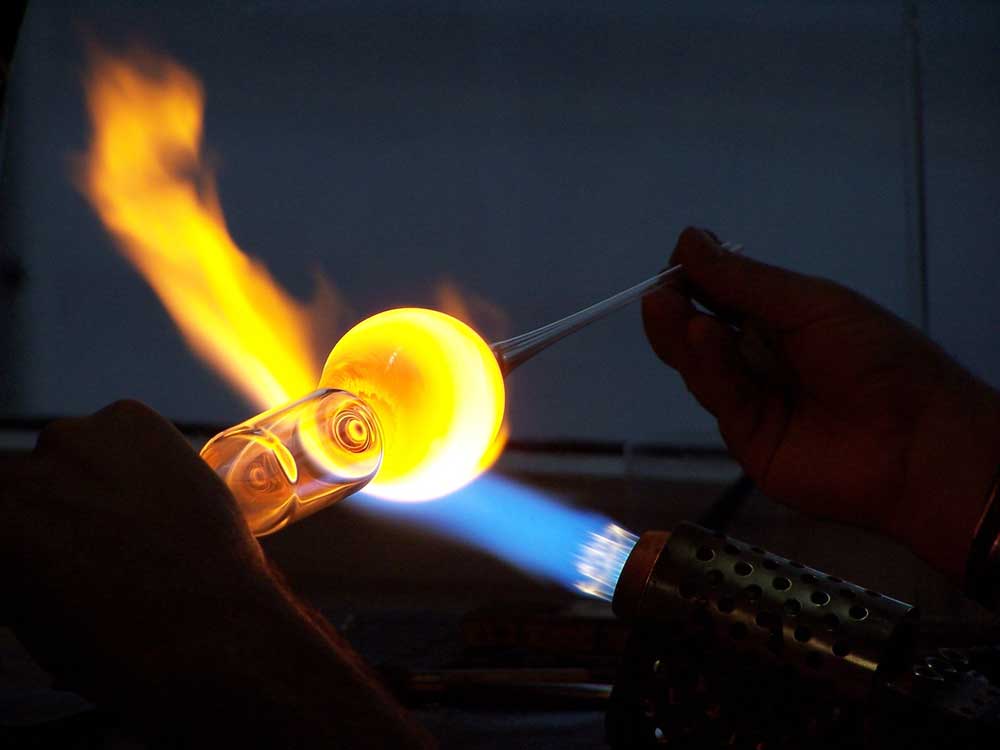
During this process, the materials used in production equipment must meet the following two criteria:
High-temperature Resistance
Glass typically melts at temperatures between 1400°C and 1600°C, and its processing and forming temperatures exceed 1000°C. Ordinary steel would soften, deform, or even melt at these temperatures. However, superalloys, through mechanisms such as solid solution strengthening and precipitation strengthening, can maintain sufficient strength and creep resistance at higher operating temperatures, ensuring the structural stability of the equipment.

Corrosion Resistance
Molten glass is a highly chemically active and corrosive liquid. It can corrode and dissolve metals in contact with it, causing damage to equipment. Furthermore, dislodged metallic impurities can contaminate the molten glass, causing defects such as bubbles and streaks, seriously impacting product quality. Superalloys, particularly those rich in elements such as chromium and aluminum, can form a dense, stable oxide film (such as Cr₂O₃ and Al₂O₃) on their surfaces, effectively resisting corrosion from the molten glass. Below, we will explain the role that superalloy plays in different glass production processes.

Sand Separation and Cleaning
The first step in glassmaking is processing the raw material: quartz sand. Natural quartz sand contains various impurities, which can affect the purity of the final glass. Therefore, the first step is to screen out these impurities. After screening, the sand is cleaned to ensure the cleanliness of the raw glass.

Both separation and cleaning require rapid agitation of the sand. Although the temperature in this step is not high, the wear resistance of the equipment is crucial. Sand itself is a highly hard material, so the equipment must be able to withstand the long-term impact and abrasion of the sand.
Hastelloy C-276 and Stellite 6 are commonly used in this step. Hastelloy C-276, a nickel-based alloy, exhibits excellent resistance to pitting and crevice corrosion in environments containing impurities and moisture, with a lifespan far exceeding that of ordinary steel. Stellite 6, a cobalt-based alloy, is most notably characterized by its exceptional wear and corrosion resistance, capable of withstanding the high-velocity impact of sand particles.
C-276
Mn
Co
V
W
Fe
Mo
Cr
Ni
6
Si
C
W
Fe
Mo
Cr
Ni
Co
Glass Heating
After separation and cleaning, the quartz sand needs to be heated to melt and fuse into glass. This heating takes place in a furnace. Two equipments are crucial in this process:

Burner Lance
The burner lance mixes fuel and air and injects them into the furnace for combustion. Its nozzle faces the high-temperature flames directly, requiring extremely high heat resistance.
Incoloy 330 and Inconel 601 are both classic heat-resistant alloys. Their high nickel-chromium content provides excellent resistance to carburization (carburization) and oxidation, making them reliable choices for burner lances.
330
Si
C
Mn
Cu
Fe
Cr
Ni
Crucible
In glass production, the crucible is the container that holds and melts the glass. It comes into direct contact with the most corrosive molten glass and operates under the harshest conditions.
In this scenario, Inconel 617 is a relatively high-quality choice. This material combines excellent high-temperature and corrosion resistance. This ensures equipment stability and prevents contamination of the molten glass.
617
Si
C
Mn
Al
Ti
Cu
Co
Mo
Fe
Cr
Ni
Glass Shaping
Glass ultimately needs to be formed into a variety of shapes for diverse applications, which necessitates shaping. To this end, molds of various shapes are manufactured to accommodate different glass products. During the shaping process, the glass is first formed at high temperatures and then its shape is fixed during cooling.
During these shaping processes, the molds periodically come into contact with the hot, softened glass, causing rapid surface temperature fluctuations and severe thermal fatigue. Furthermore, erosion and wear of the glass are inevitable. Even slight oxidation or erosion of the mold surface will leave marks on the glass.
Inconel 601 is widely used in glass molds due to its excellent resistance to high-temperature oxidation and thermal fatigue. Stellite 6 is renowned for its extremely high wear resistance and ability to maintain hardness at high temperatures. Therefore, it is often used as a hardfacing material on critical contact surfaces in molds to significantly extend their service life.
601
Si
C
Mn
Al
Cu
Fe
Cr
Ni
FAQ
Why is platinum used instead of superalloy in some critical parts of glass manufacturing?
Platinum (especially platinum-rhodium alloys) is nearly perfectly inert to most molten glass, meaning it is virtually uncorroded by the molten glass, ensuring the highest purity and consistency of glass products. Although extremely expensive, it is irreplaceable in high-end applications. Nickel-based alloys still exhibit trace corrosion, which can lead to product defects.
What are the main causes of failure in superalloy components?
1. Thermal fatigue: Repeated heating and cooling cycles generate stress within the material, causing crack initiation and propagation. 2. Molten glass corrosion/erosion: Long-term chemical and physical erosion can reduce component wall thickness and roughen the surface. 3. Oxidation/carburization: High-temperature atmospheres degrade the material surface, reducing performance.
Conclusion
Glassmaking is a complex process. It begins with screening and cleaning quartz sand, then heating it to temperatures exceeding 1000°C, and finally cooling it in molds to set the shape. Each step places high demands on the equipment's high-temperature, corrosion, and wear resistance. Therefore, superalloys have become essential materials in glass production. Inconel 601, Incoloy 330, Hastelloy C-276, and Stellite 6 are among the most commonly used.
We produce a variety of iron-, nickel-, and cobalt-based superalloys suitable for glass production. Please feel free to contact us if you have any requirements.

