
Overview
Hardness is a very common concept in our daily lives. It is also an important indicator of material properties. Human skin also has a good direct perception of hardness.
But do you know the true nature of hardness? This article will detail the actual definition of hardness and the different methods for measuring and expressing hardness.
What is Hardness?
Hardness essentially refers to a material surface's ability to resist pressure and friction. Materials with low hardness are more susceptible to scratches and dents on surface. Conversely, materials with high hardness are less susceptible to surface damage.
Hardness is a crucial metric in applications involving materials prone to wear. High-hardness, wear-resistant materials, such as Stellite alloy, are often used in these applications.
Broadly speaking, hardness is categorized into scratch hardness and indentation hardness. These indicate the resistance of a material or surface to scratches and dents, respectively. Scratch hardness and indentation hardness are further categorized into various types based on different testing methods.

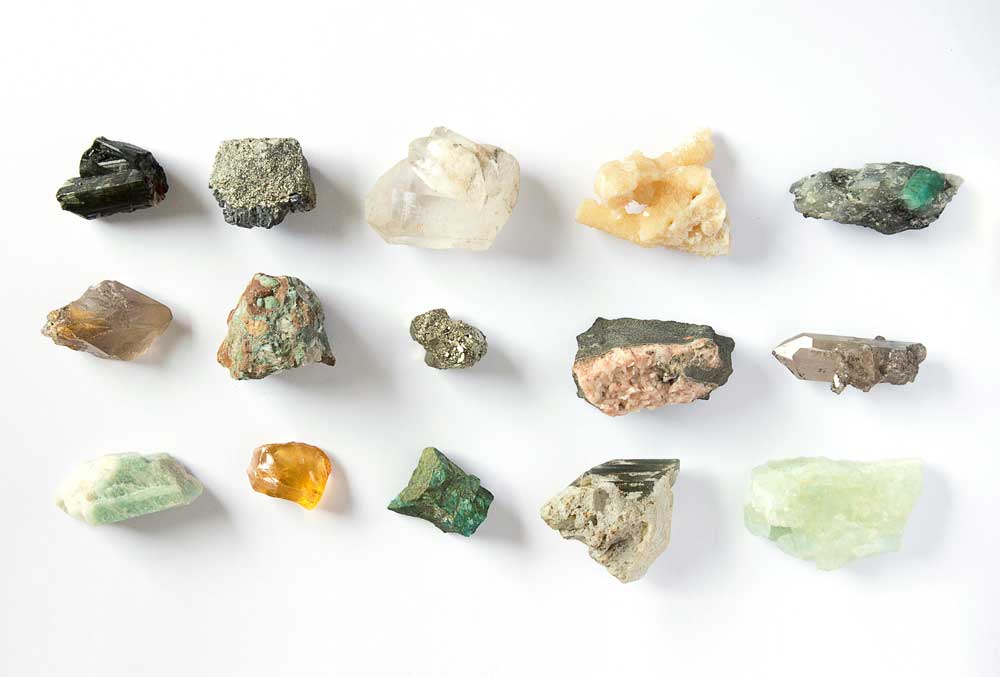
The most common scratch hardness scale is the Mohs scale, which assigns ten hardness levels to ten minerals. However, these hardness scales are not very precise and only vaguely represent the material's hardness properties.
In metals, indentation hardness is more important. Rockwell hardness, Brinell hardness, and Vickers hardness are the most common. ASTM E18 specifies the testing methods for different hardness levels.
Rockwell Hardness
The Rockwell hardness (HR) scale is a quick and simple hardness test. It works by pressing an indenter into a material's surface with a specific pressure, and the depth of penetration determines the hardness.
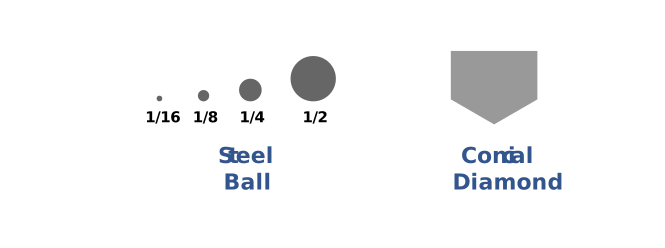
Indenters used to measure Rockwell hardness include steel balls and conical diamonds. Steel balls come in four sizes: 1/16", 1/8", 1/4", and 1/2". The conical diamond has a 120° angle.
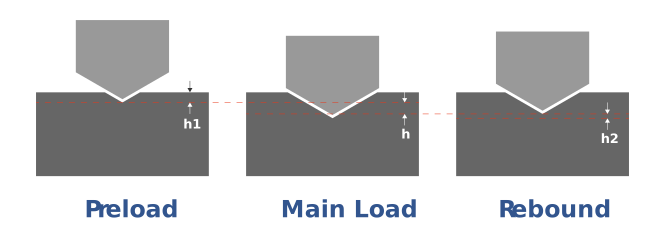
In hardness measurement, pressure is also called load (or force) and is expressed in kg (kilograms). When the indenter is pressed into the material surface, a small force of 10 kg is initially applied, called a preload. This preload is used to compensate for surface irregularities. The preload creates a depression in the material, the depth of which is recorded as h1. Further pressure is then applied to the surface, called the main load, which creates a deeper depression. Due to the elasticity of the material, the surface will rebound after the indenter is removed. The distance of this rebound is recorded as h2. The depth of the material to be measured is calculated by subtracting h1 and h2 from the indenter depth, recorded as h.
The Rockwell hardness scale is divided into several types, depending on the type of indenter and the main load. The most common scales are HRA, HRB, and HRC. The following table lists the corresponding indenters and main loads for different Rockwell hardness values:
| Scale Symbol |
Indenter | Total Test Force, kgf |
|---|---|---|
| B | 1/16" ball | 100 |
| C | diamond | 150 |
| A | diamond | 60 |
| D | diamond | 100 |
| E | 1/8" ball | 100 |
| F | 1/16" ball | 60 |
| G | 1/16" ball | 150 |
| H | 1/8" ball | 60 |
| K | 1/8" ball | 150 |
| L | 1/4" ball | 60 |
| M | 1/4" ball | 100 |
| P | 1/4" ball | 150 |
| R | 1/2" ball | 60 |
| S | 1/2" ball | 100 |
| V | 1/2" ball | 150 |
After measuring h, the specific hardness value can be calculated using the following formula:
For a steel ball indenter, N = 130. For a diamond indenter, N = 100. For example, to measure the HRC value of a material, we would use a diamond indenter and apply a primary load of 150 kg. In this case, N = 100. If the measured h is 0.07 mm, the material's hardness = 100 – 0.07/0.002 = 65 HRC. Each scale has a valid range. For example:
HRB: 20-100
HRC: 20-70
If the calculated value falls outside this range, it means you need to select a different scale to improve measurement accuracy.
Brinell Hardness
The Brinell hardness (HB) test method is very similar to the Rockwell hardness test. However, the Brinell hardness test only uses steel ball as the indenter. Furthermore, the Brinell hardness test determines the material's hardness based on the area of the indented portion. This makes the Brinell hardness test more effective for materials with uneven surface hardness. This is because the depth is measured at a single point, while the area can be measured over a portion of the surface, eliminating the influence of hardness differences at different points on the surface.
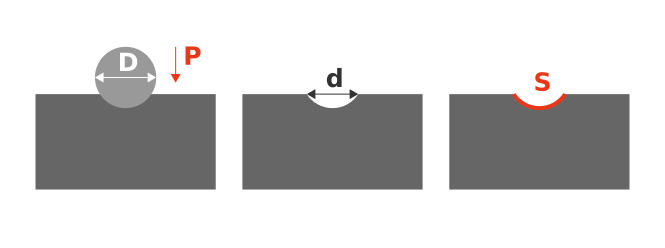
In Brinell hardness testing, the steel ball also has different diameters (10mm, 5mm, 2.5mm, 1mm), denoted by D. The diameter of the indentation created by the steel ball upon penetration into the material surface is denoted by d. The load (P) needs to be dynamically adjusted to ensure that the following inequality holds:
The following table lists different combinations of steel ball diameters and loads:
| Ball Diameter | Force/kg |
|---|---|
| 10mm | 3000 |
| 1500 | |
| 1000 | |
| 500 | |
| 250 | |
| 100 | |
| 5mm | 750 |
| 250 | |
| 125 | |
| 62.5 | |
| 25 | |
| 2.5mm | 187.5 |
| 62.5 | |
| 31.25 | |
| 15.625 | |
| 6.25 | |
| 1mm | 30 |
| 10 | |
| 5 | |
| 2.5 | |
| 1 |
The final HB value can be calculated using the following formula:
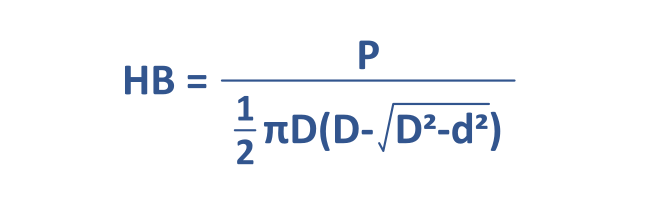
Depending on the steel ball material, HB is categorized as HBS or HBW. HBS uses hardened steel balls, while HBW uses tungsten carbide balls. However, due to the wear and tear of hardened steel balls, HBS is becoming less and less common.

Vickers Hardness
Like the Brinell hardness, the Vickers hardness (HV) indenter uses an area to determine the hardness of a material. The difference lies in the fact that the indenter uses a conical diamond. This makes choosing an indenter for the Vickers hardness measurement very simple.
Although the Brinell hardness measurement offers the highest accuracy, it suffers from a drawback: it cannot measure materials with extremely high hardness. Conical diamonds, on the other hand, are inherently harder, and their pointed tip more easily indents, making the Vickers hardness measurement applicable to materials with relatively high hardness. Furthermore, the accuracy of the area-based measurement is still guaranteed.
Unlike the conical diamonds used in the Rockwell hardness measurement, the Vickers hardness measurement uses a square pyramid rather than a cone. Furthermore, the angle is 136°. This angle ensures that the area formed by the indenter matches the area of the Brinell hardness measurement as closely as possible, facilitating a correlation between the hardnesses. Consequently, you can see that Brinell and Vickers hardness values below 450 are very similar.
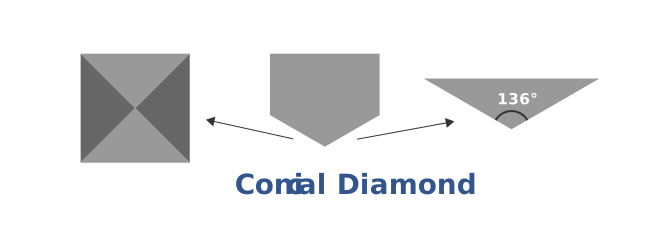
The Vickers hardness scale has the following loads corresponding to different scales:
Small: 2, 3, 5
Micro: 0.01, 0.025, 0.05, 0.1, 0.2, 0.3, 0.5, 1
You can calculate Vickers hardness using the following formula:
Where P is the pressure and S is the surface area of the indentation.
The advantage of Vickers hardness is that the indentation is small, so damage to the material is negligible, almost making it a non-destructive test. However, its disadvantage is its high cost.
Hardness Comparison Table
Different hardnesses cannot be directly converted using a simple formula. A hardness table is required for conversion.
You can use our developed tool to more conveniently convert hardness:
Alloy & Steel Unit Conversion for Tensile & Yield Strength, Hardness, Dimensions and Weight
| HV | HB | HRA | HRB | HRC | HRD | HRE | HRF | HRG | HRK |
|---|---|---|---|---|---|---|---|---|---|
| 513 | 479 | 75.5 | … | 50.0 | 63.0 | … | … | … | … |
| 481 | 450 | 74.5 | … | 48.0 | 61.5 | … | … | … | … |
| 452 | 425 | 73.5 | … | 46.0 | 60.0 | … | … | … | … |
| 427 | 403 | 72.5 | … | 44.0 | 58.5 | … | … | … | … |
| 404 | 382 | 71.5 | … | 42.0 | 57.0 | … | … | … | … |
| 382 | 363 | 70.5 | … | 40.0 | 55.5 | … | … | … | … |
| 362 | 346 | 69.5 | … | 38.0 | 54.0 | … | … | … | … |
| 344 | 329 | 68.5 | … | 36.0 | 52.5 | … | … | … | … |
| 326 | 313 | 67.5 | … | 34.0 | 50.5 | … | … | … | … |
| 309 | 298 | 66.5 | 106 | 32.0 | 49.5 | … | (116.5) | 94.0 | … |
| 285 | 275 | 64.5 | 104 | 28.5 | 46.5 | … | (115.5) | 91.0 | … |
| 266 | 258 | 63.0 | 102 | 25.5 | 44.5 | … | (114.5) | 87.5 | … |
| 248 | 241 | 61.5 | 100 | 22.5 | 42.0 | … | 113.0) | 84.5 | … |
| 234 | 228 | 60.5 | 98 | 20.0 | 40.0 | … | (112.0) | 81.5 | … |
| 220 | 215 | 59.0 | 96 | (17.0) | 38.0 | … | (111.0) | 78.5 | 100.0 |
| 209 | 204 | 57.5 | 94 | (14.5) | 36.0 | … | (110.0) | 75.5 | 98.0 |
| 198 | 194 | 56.5 | 92 | (12.0) | 34.0 | … | (108.5) | 72.0 | 96.5 |
| 188 | 184 | 55.0 | 90 | (9.0) | 32.0 | (108.5) | (107.5) | 69.0 | 94.5 |
| 179 | 176 | 53.5 | 88 | (6.5) | 30.0 | (107.0) | (106.5) | 65.5 | 93.0 |
| 171 | 168 | 52.5 | 86 | (4.0) | 28.0 | (106.0) | (105.0) | 62.5 | 91.0 |
| 164 | 161 | 51.5 | 84 | (2.0) | 26.5 | (104.5) | (104.0) | 59.5 | 89.0 |
| 157 | 155 | 50.0 | 82 | … | 24.5 | (103.0) | (103.0) | 56.5 | 87.5 |
| 151 | 149 | 49.0 | 80 | … | 22.5 | (102.0) | (101.5) | 53.0 | 85.5 |
| 145 | 144 | 47.5 | 78 | … | 21.0 | (100.5) | (100.5) | 50.0 | 83.5 |
| 140 | 139 | 46.5 | 76 | … | (19.0) | 99.5 | 99.5 | 47.0 | 82.0 |
| 135 | 134 | 45.5 | 74 | … | (17.5) | 98.0 | 98.5 | 43.5 | B0.0 |
| 130 | 129 | 44.0 | 72 | … | (16.0) | 97.0 | 97.0 | 40.5 | 78.0 |
| 126 | 125 | 43.0 | 70 | … | (14.5) | 95.5 | 96.0 | 37.5 | 76.5 |
| 122 | 121 | 42.0 | 68 | … | (13.0) | 94.5 | 95.0 | 34.5 | 74.5 |
| 119 | 118 | 41.0 | 66 | … | (11.5) | 93.0 | 93.5 | 31.0 | 72.5 |
| 115 | 114 | 40.0 | 64 | … | (10.0) | 91.5 | 92.5 | … | 71.0 |
| 112 | 111 | 39.0 | 62 | … | (8.0) | 90.5 | 91.5 | … | 69.0 |
| 108 | 108 | … | 60 | … | … | 89.0 | 90.0 | … | 67.5 |
| 106 | 106 | … | 58 | … | … | 88.0 | 89.0 | … | 65.5 |
| 103 | 103 | … | 56 | … | … | 86.5 | 88.0 | … | 63.5 |
| 100 | 100 | … | 54 | … | … | 85.5 | 87.0 | … | 62.0 |
| 98 | 98 | … | 52 | … | … | 84.0 | 85.5 | … | 60.0 |
| 95 | 95 | … | 50 | … | … | 83.0 | 84.5 | … | 58.0 |
| 93 | 93 | … | 48 | … | … | 81.5 | 83.5 | … | 56.5 |
FAQ
What is the difference between hardness and strength?
Hardness is a measure of a material's resistance to compression, while strength is a measure of its resistance to tension. Strength and hardness are often positively correlated. You'll notice that both HB and HV are calculated by dividing force by surface area, resulting in pressure, which is the same as the unit of strength, MPa. However, there are exceptions. For some special alloys, improper heat treatment can cause the precipitation of harmful phases. These harmful phases do not affect hardness, but do affect tensile strength.
How do I determine which hardness scale to use?
You can directly refer to the material's corresponding standard. As long as the material falls within the standard range, it is qualified.
Further Reading



Conclusion
Hardness refers to a material's ability to resist penetration of other substances into its surface. Depending on the penetration method, hardness can be divided into scratch hardness and indentation hardness. Indentation hardness is further divided into Rockwell hardness, Brinell hardness, and Vickers hardness. These can be converted to each other using a comparison table.
We produce a variety of high-strength superalloy materials and test the hardness of the materials strictly according to the ASTM E18 standard. If you have any needs, please contact our sales email:

